Raw Dog Food Diet: Benefits, Risks, and How to Get Started Safely
Few topics in the dog nutrition world spark as much debate as raw feeding. Walk into any dog owners’ forum or Facebook group and you’ll find passionate advocates on both sides — some swearing raw food transformed their dog’s coat, energy, and digestion, while others, including many veterinarians, warn about bacterial contamination and nutritional imbalance. So what’s the real story? This guide takes an honest, balanced look at raw dog food diets so you can decide whether it’s right for your dog.
What Is a Raw Dog Food Diet?
A raw diet, often referred to as BARF (Biologically Appropriate Raw Food) or a “prey model” diet, typically consists of uncooked meat, bones, organs, and sometimes vegetables and fruit, designed to mimic what dogs would theoretically eat in the wild. The core philosophy behind raw feeding is that dogs are biologically closer to wolves than we sometimes assume, and that cooking and processing food strips away nutrients that a natural, raw diet would otherwise provide.
A typical raw diet includes:
Muscle meat (often still on the bone) — chicken, beef, lamb, turkey
Organ meat — liver, kidney, which are nutrient-dense and considered essential in raw feeding circles
Raw meaty bones — for calcium and to support dental health
Vegetables and fruit — in smaller quantities, often pureed for better digestibility
Supplements — fish oil, eggs, or probiotics, depending on the specific protocol followed
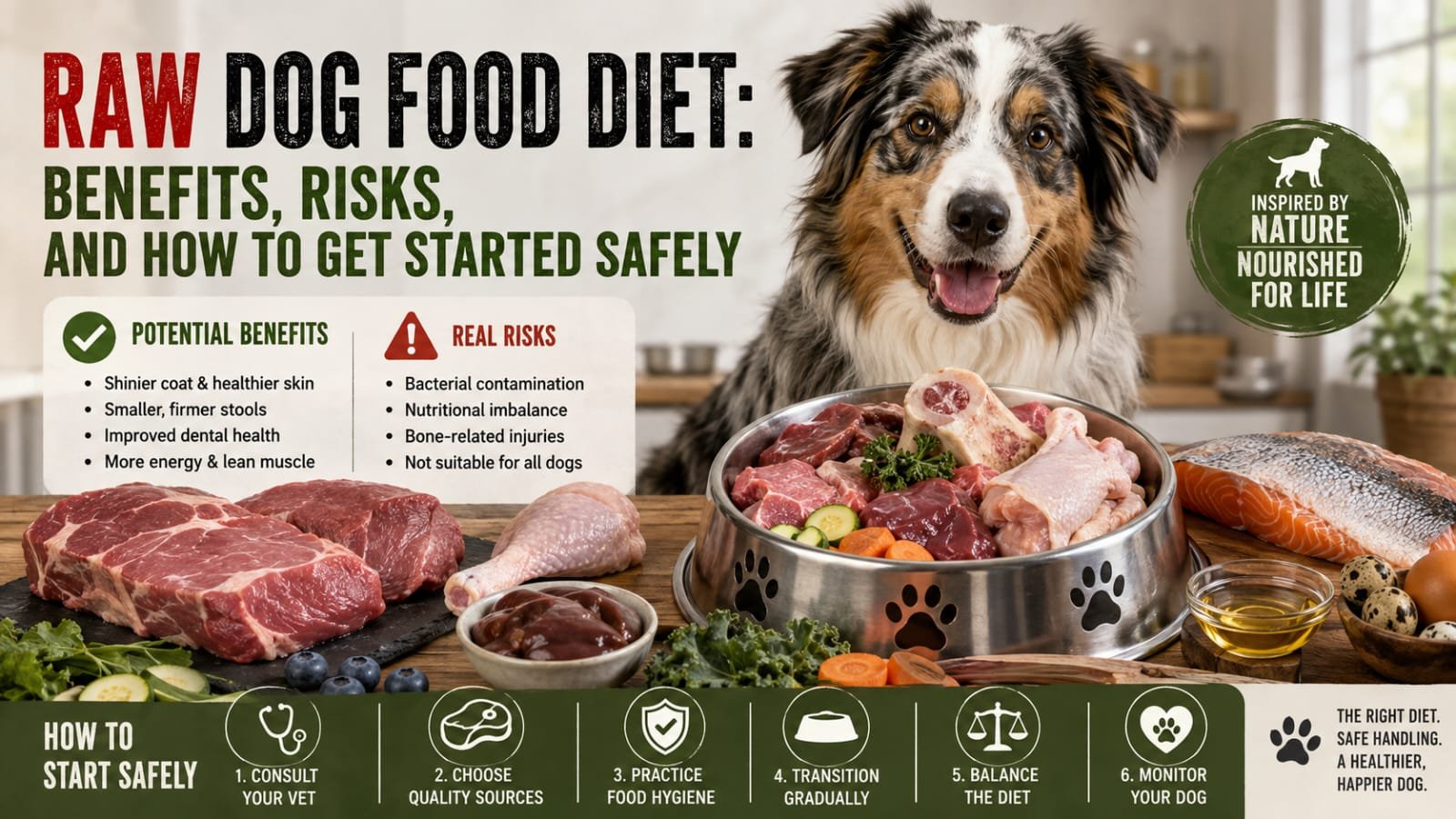
Potential Benefits of Raw Feeding
Owners who feed raw diets often report several noticeable changes, and there is some research and clinical observation supporting a few of these claims:
Shinier coat and healthier skin: The higher fat content and natural oils in raw diets can improve coat condition for many dogs, particularly compared to lower-quality kibble.
Smaller, firmer stools: Because raw diets are highly digestible with minimal filler, dogs on raw diets often produce less waste, which many owners see as a sign of better nutrient absorption.
Improved dental health: Chewing raw meaty bones can help mechanically reduce tartar buildup, similar to the effect of dental chews, though this comes with its own risks (discussed below).
Increased energy and muscle tone: Higher protein and fat content, combined with the absence of fillers and carbohydrates found in many commercial kibbles, can support leaner body composition in active dogs.
It’s worth noting that much of this evidence is observational rather than from large-scale controlled studies, so individual results can vary significantly between dogs.
The Real Risks of Raw Feeding
This is where the conversation gets more serious, and where most veterinary bodies — including the British Veterinary Association and the American Veterinary Medical Association — urge caution.
Bacterial contamination: Raw meat can carry Salmonella, E. coli, and Listeria. This isn’t just a risk for your dog; it’s a risk for your household, particularly if you have young children, elderly family members, or anyone who is immunocompromised, since these bacteria can transfer through handling, food bowls, and even a dog’s saliva after eating.
Nutritional imbalance: Formulating a truly balanced raw diet is more complex than most first-time raw feeders realize. Getting the calcium-to-phosphorus ratio right, ensuring adequate levels of vitamin D, iodine, and trace minerals, and avoiding excess vitamin A from too much liver all require careful planning — ideally with guidance from a veterinary nutritionist.
Bone-related injuries: While raw meaty bones are a staple of raw diets, bones can cause tooth fractures, and in some cases, intestinal obstructions or perforations if a dog swallows fragments or bone splinters.
Not suitable for all dogs: Puppies, senior dogs, and dogs with compromised immune systems or certain health conditions (like pancreatitis or kidney disease) are generally considered poor candidates for raw diets due to the higher risk profile.
What Does the Research Actually Say?
Scientific opinion on raw feeding remains genuinely mixed. Some studies have found that raw-fed dogs show favorable markers for digestion and stool quality, while others have raised concerns about bacterial shedding in feces, even in dogs that show no symptoms of illness themselves — meaning they can still spread bacteria to other pets or people. Most major veterinary and nutrition organizations don’t outright ban raw feeding but instead recommend it only be done with careful sourcing, strict hygiene, and ideally under veterinary or nutritionist guidance rather than a fully DIY approach.
How to Start a Raw Diet Safely
If you’ve weighed the pros and cons and decided raw feeding is right for your dog, here’s how to reduce the risks significantly:
- Consult Your Vet First
Before making any major diet change, talk to your vet, especially if your dog has an existing health condition. They can help you assess whether raw feeding is appropriate and flag any specific concerns based on your dog’s breed, age, and medical history. - Choose a Reputable Source
Whether you’re making your own raw diet or buying a commercial raw product, sourcing matters enormously. Look for:
Human-grade meat from reputable suppliers
Commercial raw diets that are formulated to meet AAFCO or FEDIAF complete-and-balanced standards, not just “raw treats”
Proper cold-chain storage and handling from supplier to your freezer - Practice Strict Food Hygiene
Use separate cutting boards and utensils for raw dog food
Wash your hands thoroughly after handling raw meat
Disinfect food bowls and prep surfaces after every meal
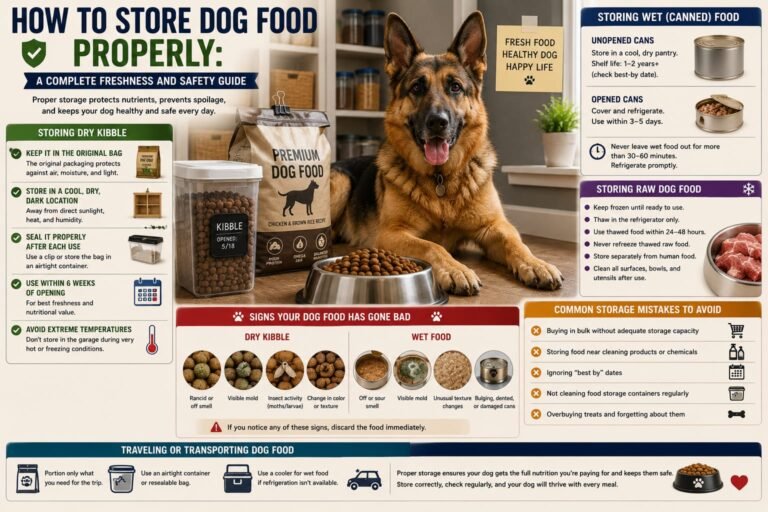
Store raw food in the freezer and thaw only what you need in the refrigerator, never at room temperature - Transition Gradually
Switching a dog from kibble to raw abruptly can cause digestive upset. Introduce raw food gradually over 1–2 weeks, starting with small portions mixed alongside their current diet, and watch for any signs of gastrointestinal distress. - Balance the Diet Properly
If you’re making your own raw diet rather than using a commercial complete formula, work with a veterinary nutritionist to create a recipe that meets all essential nutrient requirements. General guidelines suggest roughly 70–80% muscle meat, 10% raw bone, and 10–20% organ meat, but exact ratios should be tailored to your specific dog. - Monitor Your Dog Closely
Keep an eye on stool quality, energy levels, coat condition, and weight in the weeks after transitioning. Regular vet check-ups, including periodic bloodwork, can help catch any nutritional deficiencies early.
Raw Feeding in the US vs UK: Regulatory Differences
In the UK, raw pet food producers must comply with regulations set out by DEFRA and local authorities regarding hygiene and sourcing, and many commercial raw brands carry a PAWS (Processed Animal Protein) or ABP (Animal By-Products) registration to indicate regulatory compliance. In the US, commercial raw diets fall under FDA oversight and, if labeled “complete and balanced,” must meet AAFCO nutrient profiles. In both countries, choosing a commercially prepared raw diet from a compliant, reputable brand significantly reduces the guesswork and risk compared to formulating a fully homemade raw diet yourself.
Is Raw Feeding Right for Your Dog?
Raw feeding isn’t inherently right or wrong — it’s a significant commitment that requires research, careful sourcing, and ongoing attention to nutritional balance. It may suit highly active adult dogs without underlying health conditions particularly well, while being a poor fit for puppies, seniors, or immunocompromised dogs and households. If you’re drawn to the benefits of raw feeding but wary of the risks, commercial raw diets formulated to meet complete-and-balanced standards offer a middle ground — delivering many of the potential benefits with more consistent nutritional oversight than a fully DIY approach.
Ultimately, the best diet for your dog is one that’s nutritionally complete, safely handled, and appropriate for their individual health needs — whether that turns out to be raw, cooked, or a high-quality commercial kibble.