Dog Food Ingredients to Avoid: A Complete Guide
Reading a dog food ingredient label can feel like decoding a foreign language long chemical names, vague terms, and a marketing front that doesn’t always match what’s actually inside the bag. While not every questionable-sounding ingredient is genuinely harmful, some are worth understanding so you can make a more informed choice. This guide breaks down the ingredients worth watching for, why they raise concern, and how to read a label like someone who actually knows what they’re looking at.
Why Ingredient Quality Matters
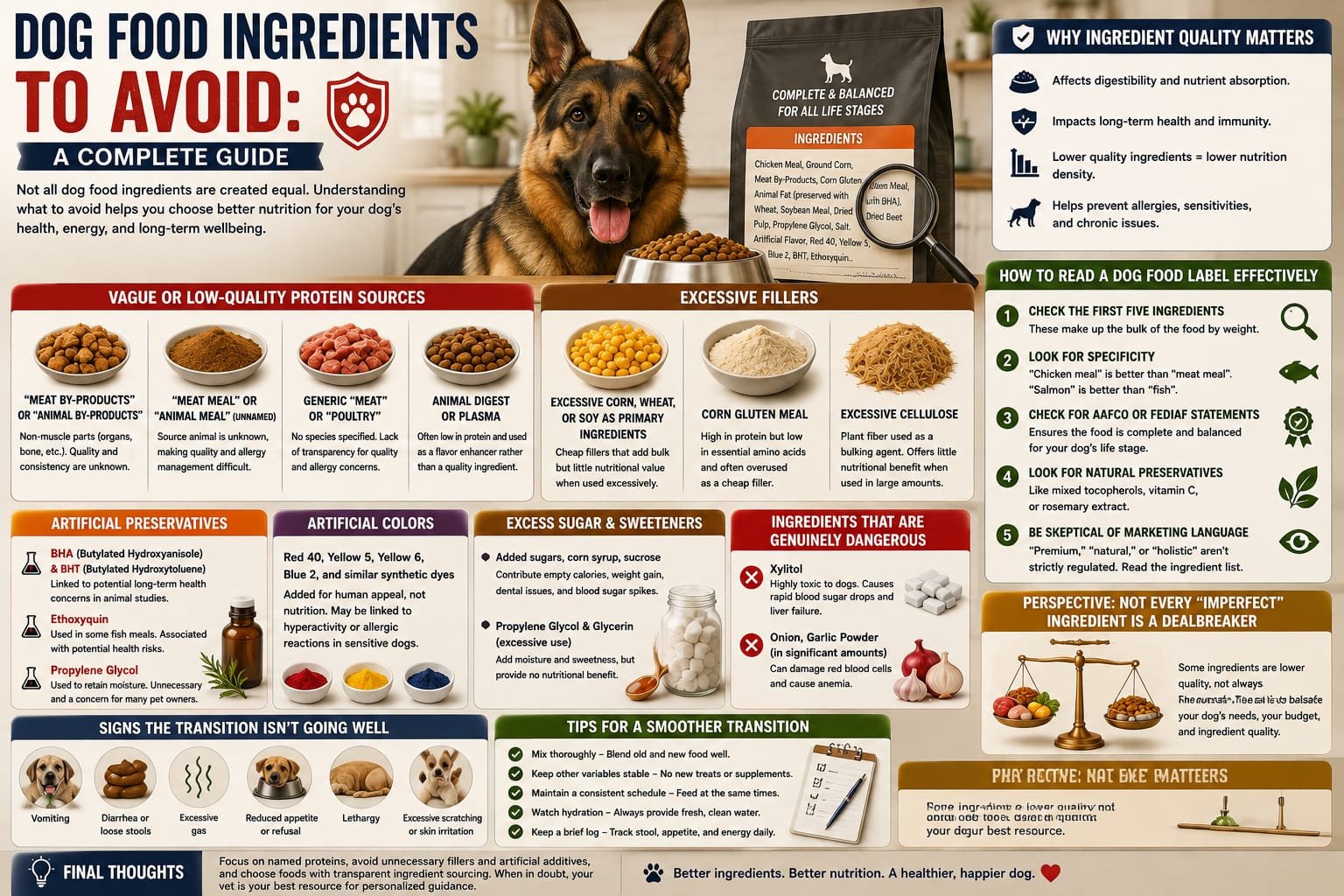
Not all dog food ingredients are created equal, even when they technically meet minimum nutritional standards set by AAFCO (US) or FEDIAF (UK). Lower-quality ingredients can affect digestibility, long-term health, and how well your dog’s body actually absorbs and uses the nutrients in their food. Understanding what to look for — and what to be cautious of — helps you move beyond marketing claims and evaluate a product on its actual substance.
Vague or Low-Quality Protein Sources
“Meat by-products” or “animal by-products”: These terms refer to non-muscle parts of an animal organs, bone, and other tissue that can actually be nutrient-dense, but the vagueness of the term makes it impossible to know exactly what’s included or verify consistent quality between batches. A named source, like “chicken liver” or “beef kidney,” gives you far more transparency than a generic catch-all term.
“Meat meal” or “animal meal” (unnamed): Similar to by-products, unnamed meat meal doesn’t specify the source animal, making it harder to assess quality or rule out a specific protein if your dog has a known allergy.
Generic “meat” or “poultry”: Without a named species, there’s no way to know exactly what protein source you’re feeding, which is particularly relevant for dogs managing food allergies or sensitivities.
Excessive Fillers
Excessive corn, wheat, or soy as primary ingredients: These aren’t inherently harmful in moderate amounts, and can provide useful nutrients, but when they dominate the first several ingredients ahead of any named protein source, it can indicate the food is using cheap bulk ingredients rather than prioritizing nutritional quality.
Cellulose (in excessive amounts): A plant fiber sometimes used as a low-cost bulking agent. Some fiber is beneficial for digestion, but excessive amounts primarily used to cheaply increase volume, rather than for genuine nutritional benefit, is worth noting.
Artificial Preservatives
BHA (Butylated Hydroxyanisole) and BHT (Butylated Hydroxytoluene): These synthetic preservatives have raised some concern in animal studies regarding potential long-term health effects, though regulatory bodies in both the US and UK still permit their use within specified limits. Many premium brands have moved toward natural alternatives like mixed tocopherols (a form of vitamin E) or rosemary extract instead.
Ethoxyquin: Originally developed as a rubber stabilizer, this preservative has been used in some pet foods, particularly in fish meal, and has drawn scrutiny over potential health effects with long-term exposure. Its use has declined significantly as awareness has grown, but it’s worth checking for on labels, particularly for fish-based formulas.
Propylene glycol: Sometimes used in semi-moist dog foods and treats to retain moisture. While the FDA considers it generally recognized as safe in dog food (unlike in cat food, where it’s banned due to toxicity), some owners prefer to avoid it given its industrial associations, opting for foods that don’t rely on it.
Artificial Colors
Red 40, Yellow 5, Yellow 6, Blue 2, and similar synthetic dyes: These are added purely for visual appeal to make the food look more appetizing to humans, since dogs don’t actually care what color their food is. Some studies have raised questions about artificial dyes’ potential links to hyperactivity or allergic reactions in sensitive individuals (research is more established in humans and rodents than specifically in dogs), leading many owners to prefer naturally colored formulas as a precaution.
Excessive Sugar and Sweeteners
Added sugars, corn syrup, or sucrose: Some lower-quality foods and many treats include added sugars primarily to improve palatability. Beyond unnecessary calories, excess sugar intake can contribute to weight gain, dental issues, and in some cases, may affect blood sugar regulation, particularly in dogs already prone to diabetes.
Propylene glycol and glycerin (excessive use): Beyond their preservative role, these can also be used to add sweetness and moisture, particularly in semi-moist treats, contributing unnecessary calories without meaningful nutritional benefit.
Ingredients That Are Genuinely Dangerous, Not Just Lower Quality
While most of the ingredients above fall into a “lower quality, worth being cautious about” category rather than being acutely dangerous, a few ingredients should never appear in a dog food at all:
Xylitol: An artificial sweetener toxic to dogs, causing dangerous blood sugar drops and potential liver damage. It should never appear in any product intended for dogs, though it occasionally shows up as a labeling error in cross-contaminated facilities always double check ingredient lists, especially in treats and dental products.
Onion or garlic powder in significant quantities: While small amounts of garlic are sometimes included in commercial foods and are generally considered safe in the minimal quantities used (and some research even suggests trace garlic may have mild health benefits), concentrated onion or garlic powder used as a flavor enhancer in poorly formulated products could pose a risk, particularly with cumulative exposure over time.
How to Read a Dog Food Label Effectively
- Check the first five ingredients these make up the bulk of the food by weight, and should ideally include a named protein source at or near the top.
- Look for specificity “chicken meal” is more transparent than “meat meal”; “salmon” is more transparent than “fish.”
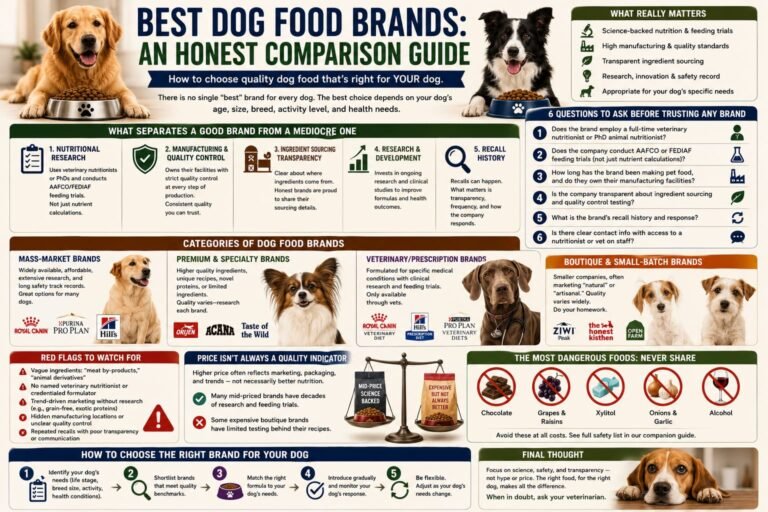
- Check for AAFCO or FEDIAF statements confirming the food is complete and balanced for your dog’s life stage this ensures a baseline of nutritional adequacy regardless of ingredient sourcing debates.
- Look for natural preservatives like mixed tocopherols, vitamin C, or rosemary extract rather than synthetic options, if avoiding artificial preservatives is a priority for you.
- Be skeptical of marketing language terms like “premium,” “natural,” or “holistic” aren’t strictly regulated and don’t guarantee actual ingredient quality; the ingredient list itself tells the real story.
Perspective: Not Every “Imperfect” Ingredient Is a Dealbreaker
It’s worth noting that some of the ingredients discussed above, particularly named by-products and moderate use of grains or preservatives within regulatory limits, aren’t inherently unsafe they’re simply lower on the quality spectrum compared to premium alternatives, and budget matters for many households. The goal of understanding these ingredients isn’t necessarily to avoid them entirely at all costs, but to make an informed decision that balances your dog’s individual needs, your budget, and your personal comfort level with different ingredient sourcing practices.
Final Thoughts
Learning to read a dog food label critically empowers you to move past marketing buzzwords and evaluate what you’re actually feeding your dog. While a handful of ingredients like xylitol are genuinely dangerous and should be avoided entirely, most of what’s discussed here falls into a spectrum of quality rather than a strict safe-or-unsafe divide. Prioritize named protein sources, watch for excessive fillers or added sugars, and lean toward natural preservatives where your budget allows, and you’ll be well-equipped to choose a food that genuinely supports your dog’s long-term health.