
Best Dog Food for Puppies: The Complete Feeding Guide for New Owners
Bringing a puppy home is one of life’s most exciting moments but it also comes with a long list of responsibilities, and none is more important than getting nutrition right from day one. What you feed your puppy in these first twelve months doesn’t just affect how fast they grow; it shapes their bone development, immune strength, brain function, and even their long-term risk of obesity and joint disease. If you’ve ever stood in a pet store aisle staring at dozens of bags wondering which one is actually best for your puppy, you’re not alone. This guide breaks down everything you need to know, in plain language, so you can make a confident, informed choice.
Why Puppy Nutrition Is Different From Adult Dog Food
Puppies aren’t just small dogs they’re growing organisms with dramatically different nutritional needs than adults. During the first year of life, a puppy’s body is building skeletal structure, developing muscle mass, and forming a functioning immune system almost from scratch. This requires significantly more protein, fat, calcium, phosphorus, and calories per pound of body weight than an adult dog needs.
Feeding a puppy adult dog food, even temporarily, can lead to nutritional gaps that affect development. On the flip side, overfeeding calorie-dense food or getting the calcium-to-phosphorus ratio wrong especially in large breed puppies can cause skeletal problems that last a lifetime. This is why “puppy formula” isn’t just a marketing label; it reflects a genuinely different nutritional profile designed around the AAFCO (Association of American Feed Control Officials) growth and reproduction standards in the US, or the equivalent FEDIAF guidelines used across the UK and Europe.
Key Nutrients Every Puppy Food Needs
When you flip a bag of puppy food over and look at the guaranteed analysis, here’s what actually matters:
Protein (minimum 22–32%): Puppies need high-quality animal-based protein to build muscle and support organ development. Look for a named meat source chicken, salmon, lamb, beef as the first ingredient rather than vague terms like “meat meal” or “animal by-product.”
Fat (minimum 8–15%): Fat is the primary energy source for a growing puppy and also supports brain and coat development. DHA, an omega-3 fatty acid found in fish oil, is particularly important for cognitive and vision development in the first few months.
Calcium and Phosphorus: This ratio is critical, particularly for large and giant breed puppies. Too much calcium during rapid growth phases has been linked to developmental orthopedic issues like hip dysplasia. Reputable puppy foods are formulated to keep this ratio within a safe range, typically around 1.2:1 to 1.4:1.
DHA and Omega-3s: Found naturally in fish oil, these fatty acids support brain and retinal development, which is why many premium puppy formulas highlight DHA content prominently on the packaging.
Digestible Carbohydrates: While dogs don’t have a strict dietary requirement for carbohydrates, digestible sources like rice, oats, or sweet potato provide steady energy and support gut health when balanced correctly.
Large Breed vs Small Breed Puppies: Why Size Matters
One of the most overlooked distinctions in puppy nutrition is breed size. A Chihuahua puppy and a Great Dane puppy have wildly different growth trajectories, and feeding them the same formula can cause real harm.
Large and giant breed puppies (dogs expected to weigh over 55–70 lbs / 25–32 kg as adults) grow much more slowly and over a longer period often 18 to 24 months compared to small breeds. Because of this extended growth window, large breed puppy formulas are specifically formulated with controlled calcium levels and slightly lower calorie density to prevent them from growing too fast, which can strain developing joints and increase the risk of hip and elbow dysplasia later in life.
Small breed puppies, on the other hand, reach adult size much faster sometimes within 9 to 12 months and have higher metabolic rates relative to their body size. They benefit from smaller kibble sizes that are easier to chew and calorie-dense formulas that support their fast metabolism without requiring huge meal volumes, since small breed puppies are also more prone to hypoglycemia (low blood sugar) if underfed.
Wet, Dry, or Homemade: What’s Best for Puppies?
There’s no single right answer here it depends on your puppy’s needs, your budget, and your lifestyle.
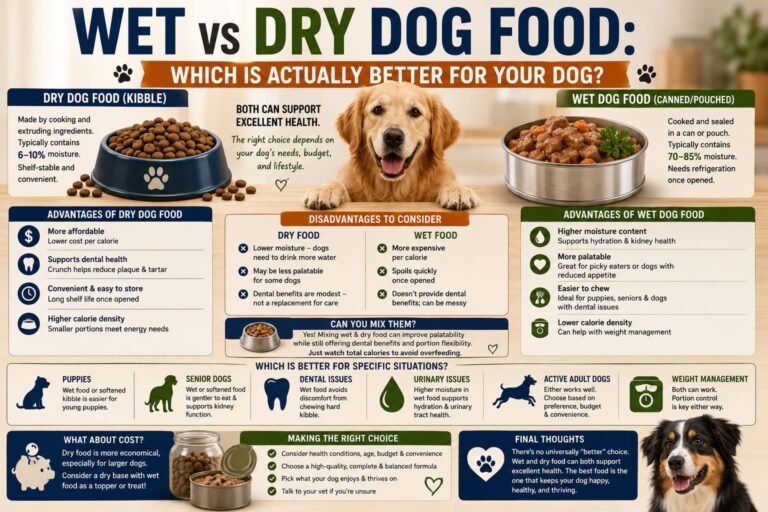
Dry kibble is the most common choice for a reason: it’s convenient, cost-effective, has a long shelf life, and the crunching action can help reduce plaque buildup on teeth. Make sure the kibble size is appropriate for your puppy’s mouth smaller breeds need smaller kibble.
Wet food tends to be more palatable and has higher moisture content, which can be helpful for puppies transitioning off their mother’s milk or those who are picky eaters. It’s often more expensive per calorie and can contribute to dental tartar if used exclusively.
Homemade diets can work well but require careful formulation, ideally with input from a veterinary nutritionist, to avoid nutritional deficiencies. This is not a place to improvise growing puppies are unforgiving of nutritional mistakes in ways that adult dogs are not.
Many owners find a mixed approach works well: primarily dry kibble as a base, with wet food mixed in for palatability and hydration.
How Often Should You Feed a Puppy?
Feeding frequency changes as your puppy grows:
- 8–12 weeks old: 4 meals per day
- 3–6 months old: 3 meals per day
- 6–12 months old: 2 meals per day
- After 12 months (or later for large breeds): Transition to adult feeding schedule, typically 2 meals per day
Puppies have small stomachs and high energy needs, so frequent, smaller meals help maintain stable blood sugar and steady energy levels throughout the day, while also reducing the risk of bloating.
Reading Puppy Food Labels: What to Watch For
In both the US and UK, puppy food labels can be genuinely confusing, and manufacturers know how to make an average product look premium. Here’s what to actually check:
- Life stage statement: Look for wording confirming the food is “complete and balanced for growth” (US, AAFCO) or “complete” for the growth/puppy life stage (UK, FEDIAF). This confirms it meets minimum nutritional standards for puppies specifically.
- Ingredient order: Ingredients are listed by weight, so the first few ingredients tell you the most about what you’re actually feeding.
- Avoid vague fillers: Terms like “meat by-products” or “animal derivatives” (common on UK labels) aren’t automatically bad, but named protein sources are generally a better sign of quality control.
- Breed-size specific formulas: If you have a large or giant breed puppy, prioritize a formula explicitly labeled for large breed growth.
Common Puppy Feeding Mistakes to Avoid
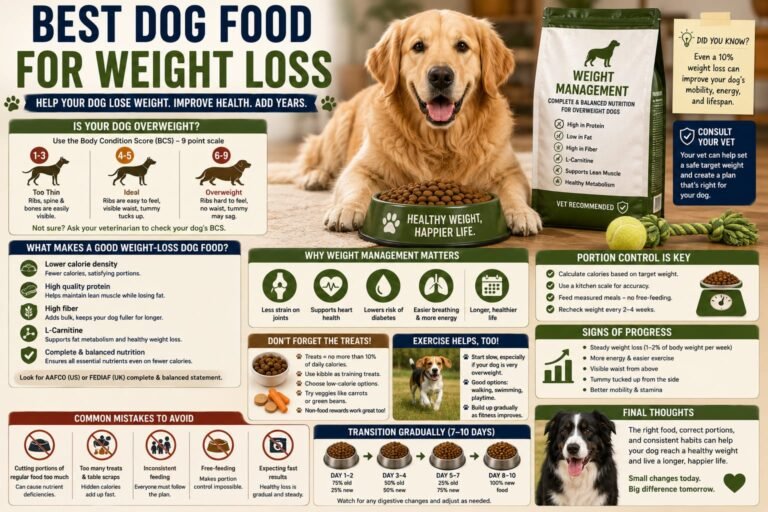
Overfeeding treats: Treats should never exceed 10% of a puppy’s daily caloric intake. It’s easy to overdo it during training, but excess calories during growth phases contribute to unhealthy weight gain that stresses developing joints.
Switching foods too quickly: Any diet change should happen gradually over 7–10 days, mixing increasing amounts of new food with the old to avoid digestive upset.
Free-feeding: Leaving food out all day makes it hard to monitor how much your puppy is actually eating and can contribute to overeating and poor appetite regulation.
Ignoring water intake: Fresh water should always be available, especially if feeding dry kibble, which has low moisture content compared to wet food.
Skipping the vet conversation: Every puppy is different. Breed, activity level, and any health conditions should factor into your feeding plan, and a vet can help you fine-tune portion sizes as your puppy grows.
Transitioning From Puppy Food to Adult Food
Most small and medium breed dogs can transition to adult food around 12 months of age. Large and giant breeds often benefit from staying on puppy or “large breed growth” formulas until 18–24 months, since their skeletal development continues longer. As with any diet change, transition gradually over a week to ten days to avoid gastrointestinal upset.
Final Thoughts
Choosing the right puppy food isn’t about finding the most expensive bag on the shelf — it’s about understanding your puppy’s specific needs based on breed size, growth rate, and individual health, then matching that to a nutritionally complete formula. Whether you’re in the US working with AAFCO-certified formulas or in the UK following FEDIAF guidelines, the principles are the same: prioritize named protein sources, respect breed-size differences, feed appropriately for your puppy’s age, and resist the urge to overfeed treats. Get these fundamentals right, and you’ll be giving your puppy the strongest possible start for a long, healthy life.