Wet vs Dry Dog Food: Which Is Actually Better for Your Dog?
Standing in the pet food aisle, you’ve probably wondered whether you’re doing right by your dog with that bag of kibble, or whether those cans of wet food might actually be the healthier choice. The truth is, this isn’t really a question with a single universal answer both wet and dry dog food can support excellent health, and the right choice depends on your dog’s individual needs, your budget, and your lifestyle. Let’s break down the real differences.
The Basic Differences
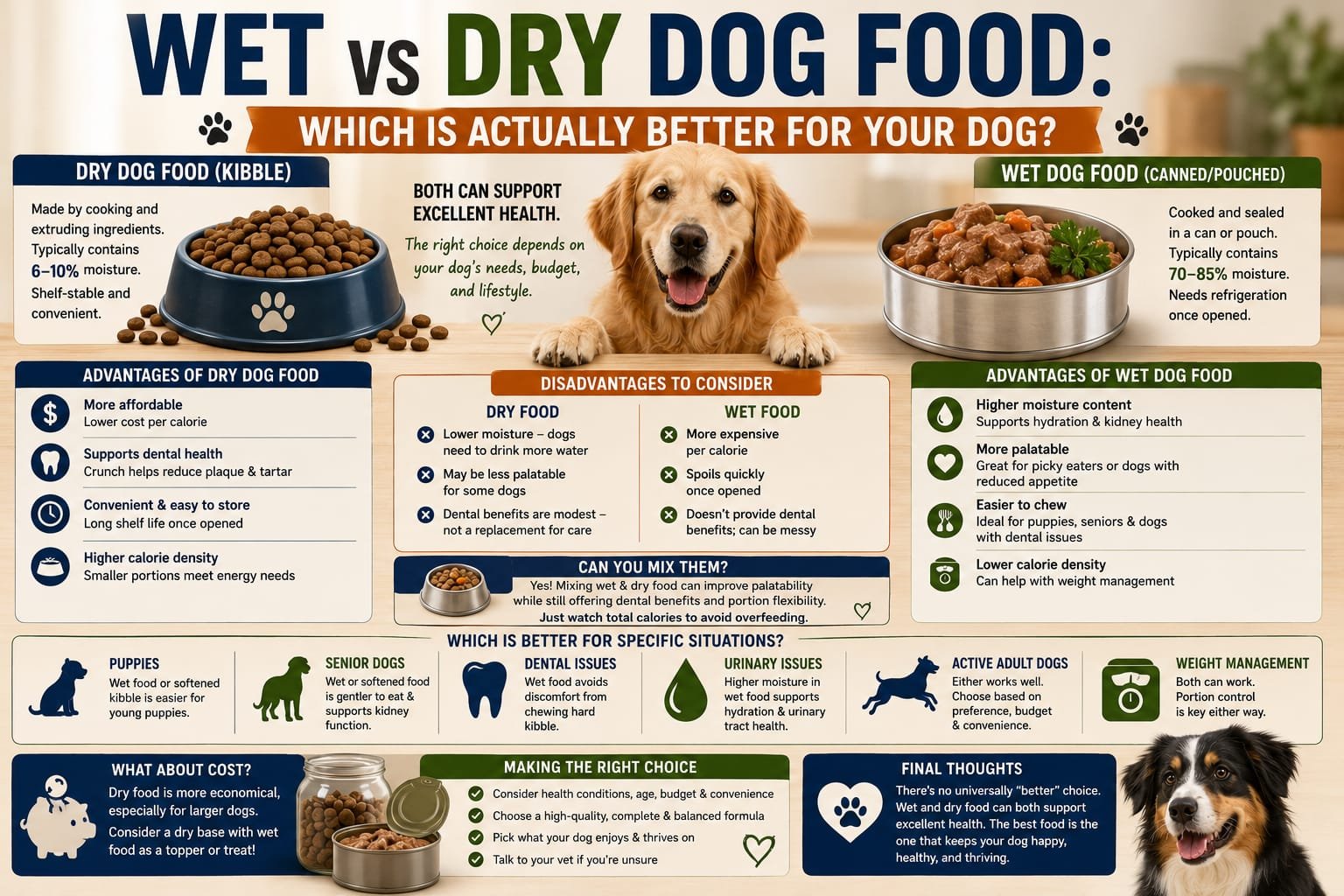
Dry dog food (kibble) is made by combining ingredients into a dough, which is then extruded, shaped, and baked or extruded under heat and pressure. It typically contains around 6–10% moisture, making it shelf-stable for long periods once sealed.
Wet dog food (canned or pouched) contains significantly more moisture typically 70–85% and is cooked and sealed in an airtight container, giving it a longer shelf life while unopened, but requiring refrigeration once opened, similar to human canned food.
Both formats can be formulated to be nutritionally complete and balanced, meeting AAFCO (US) or FEDIAF (UK) standards, so neither is inherently “better” from a baseline nutrition standpoint the differences lie more in practical benefits and drawbacks.
Advantages of Dry Dog Food
Convenience and cost: Kibble is generally more affordable per calorie, has a longer shelf life once opened, and is easy to store, measure, and transport, making it a practical choice for many households.
Dental benefits: The crunching action of chewing kibble can help mechanically reduce plaque and tartar buildup on teeth, though this effect is modest and shouldn’t replace proper dental care like brushing or dental chews.
Free-feeding compatibility: Because it doesn’t spoil quickly at room temperature, dry food can be left out for longer periods, which some owners find more practical for their schedule (though free-feeding does come with its own risks around overeating and weight management).
Higher calorie density: Dry food packs more calories per gram than wet food, meaning smaller portions can meet a dog’s energy needs useful for larger dogs where feeding an all-wet diet would require large volumes of food.
Advantages of Wet Dog Food
Higher moisture content: This can support better hydration, which is particularly beneficial for dogs with kidney disease, urinary issues, or those who don’t drink enough water on their own.
Palatability: Wet food’s stronger aroma and texture often appeal more to picky eaters, senior dogs with a diminished sense of smell, or dogs recovering from illness with a reduced appetite.
Easier to chew: For puppies transitioning off milk, senior dogs with dental issues, or dogs recovering from oral surgery, the soft texture of wet food is much easier and more comfortable to eat.
Lower calorie density can help with weight management: Because wet food contains more water relative to calories, some dogs feel fuller on a lower-calorie wet diet, which can be helpful for weight loss plans, though this varies by formula.
Disadvantages to Consider
Dry food downsides: Lower moisture content means dogs need to drink more water to stay properly hydrated, which not all dogs reliably do on their own. Some dogs also find kibble less palatable, particularly older dogs or picky eaters.
Wet food downsides: It’s generally more expensive per calorie, spoils quickly once opened and exposed to air, and doesn’t offer the same dental benefits as crunching on kibble. It can also be messier to serve and store.
Does Wet or Dry Food Affect Digestion Differently?
Some owners report that their dogs digest wet food more easily, possibly due to its higher moisture content and generally simpler ingredient processing. However, this varies significantly between individual dogs, and there’s no universal rule that one format is inherently easier to digest than the other — a high-quality kibble can be just as digestible as a high-quality wet food, and vice versa.
Can You Mix Wet and Dry Food?
Absolutely, and many owners do exactly this to get the benefits of both. Mixing wet and dry food can improve palatability while still providing some of the dental benefits of kibble, and it allows for portion flexibility if you’re managing your dog’s weight. Just make sure you’re accounting for the combined calorie content of both foods to avoid overfeeding, since it’s easy to underestimate total calories when mixing formats.
Which Is Better for Specific Situations?
Puppies: Wet food or softened kibble is often easier for very young puppies to eat, though most transition to dry kibble as their adult teeth come in.
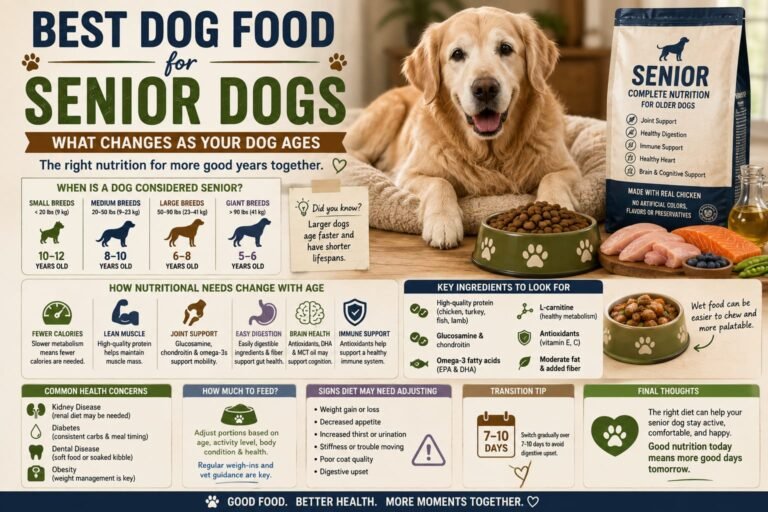
Senior dogs: Wet food or softened kibble can be gentler on aging teeth and gums, and the added moisture supports kidney function, which becomes more important with age.
Dogs with dental disease: Wet food avoids the discomfort of chewing hard kibble, though addressing the underlying dental issue with your vet remains important.
Dogs prone to urinary issues: The higher moisture content in wet food can support better hydration and urinary tract health, something often recommended by vets for dogs with a history of urinary crystals or infections.
Active, healthy adult dogs: Either format works well; the choice often comes down to owner convenience, budget, and the individual dog’s preference.
Dogs needing weight management: Both formats can work, but the calorie density difference means portion control looks different depending on which you choose work with your vet to calculate appropriate portions either way.
What About Cost?
Dry food is almost always more economical, particularly for larger dogs that require bigger portions. Wet food’s higher water content means you’re paying more per calorie, since a significant portion of each can or pouch is simply water. For budget-conscious households with larger dogs, a dry food base with wet food used as a topper or occasional treat can offer a reasonable middle ground.
Making the Right Choice for Your Dog
Rather than treating this as a strict either/or decision, consider your dog’s specific needs:
Health conditions kidney issues, urinary problems, or dental disease may tip the scales toward wet food
Age puppies and seniors often benefit from the easier chewing and higher palatability of wet food
Budget dry food offers better value for most households, especially with larger dogs
Convenience dry food is easier to store, transport, and leave out
Your dog’s individual preference ultimately, the best food is one your dog will actually eat consistently and enjoy
Final Thoughts
There’s no universally “better” choice between wet and dry dog food both can provide complete, balanced nutrition when chosen from reputable brands. The right decision comes down to your dog’s specific health needs, age, and your household’s practical circumstances. Many owners find that a combination of both, tailored to their dog’s individual needs, offers the best of both worlds. Whatever you choose, focus on selecting a high-quality formula appropriate for your dog’s life stage, and don’t hesitate to consult your vet if you’re unsure which format best supports your dog’s specific health situation.