Human Foods Dogs Can and Cannot Eat: The Complete Safety Guide
Those pleading eyes staring up at you during dinner are hard to resist, and sharing a bit of “people food” with your dog can feel like a harmless act of love. But some human foods are perfectly safe treats, while others can cause serious illness or even be fatal. This guide gives you a clear, practical breakdown of what’s safe to share and what needs to stay far away from your dog’s bowl.
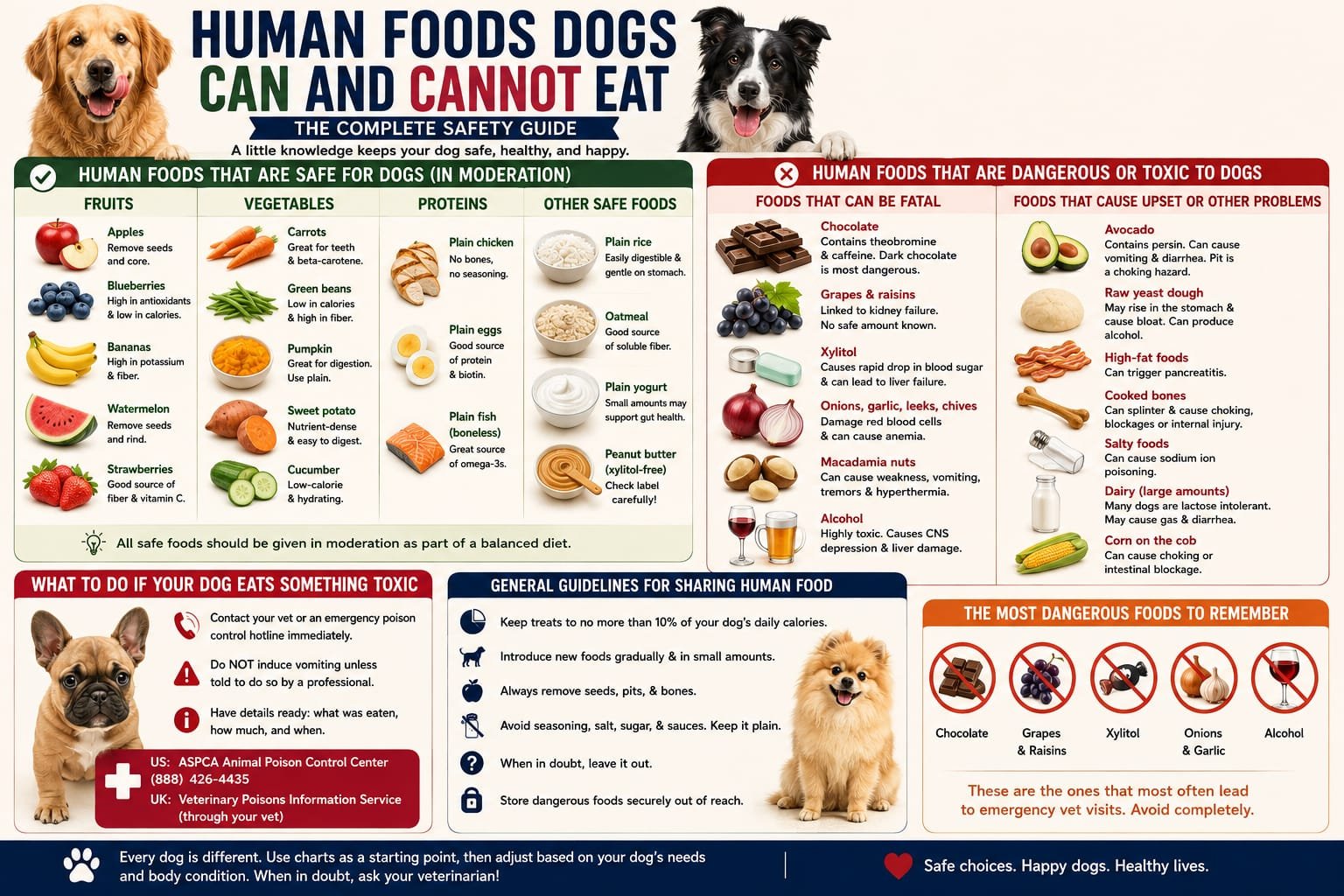
Human Foods That Are Safe for Dogs (in Moderation)
Fruits
Apples: A great source of fiber and vitamins A and C. Remove the seeds and core first, as apple seeds contain trace amounts of cyanide compounds that can be harmful in large quantities.
Blueberries: Packed with antioxidants and low in calories, making them a popular training treat.
Bananas: High in potassium and fiber, but also relatively high in sugar, so they’re best given in small amounts.
Watermelon: A hydrating, low-calorie treat, especially in warm weather just remove seeds and rind first.
Strawberries: Contain fiber and vitamin C, though their natural sugar content means moderation is key.
Vegetables
Carrots: Low-calorie, crunchy, and good for dental health, plus a good source of beta-carotene. Popular as a frozen treat too.
Green beans: Low in calories and a good source of fiber, often used as a filler in weight management diets.
Pumpkin (plain, cooked or canned): Excellent for digestive health due to its fiber content, and often recommended by vets for dogs with mild digestive upset.
Sweet potato: A nutrient-dense carbohydrate source, commonly found in commercial dog foods and safe when cooked plain.
Cucumber: Low-calorie and hydrating, a good option for dogs who need to watch their weight.
Proteins
Plain cooked chicken (no bones, no seasoning): A lean protein source, often used as a bland diet option during digestive upset.
Plain cooked eggs: A good source of protein and biotin, generally well-tolerated by most dogs.
Plain cooked fish (boneless): Salmon and other fish provide beneficial omega-3 fatty acids, but should always be fully cooked, since raw fish can carry parasites.
Other Safe Foods
Plain rice and oatmeal: Easily digestible carbohydrates, often used in bland diets for dogs recovering from digestive upset.
Plain yogurt (in small amounts): Contains probiotics that may support gut health, though some dogs are lactose intolerant, so introduce gradually and watch for reactions.
Peanut butter (xylitol-free): A popular treat, but always check the label carefully — many peanut butters now contain xylitol, an artificial sweetener that is highly toxic to dogs.
Human Foods That Are Dangerous or Toxic to Dogs
Foods That Can Be Fatal
Chocolate: Contains theobromine and caffeine, both of which dogs metabolize much more slowly than humans, leading to toxicity. Dark chocolate and baking chocolate are more concentrated and more dangerous than milk chocolate, but all forms should be avoided entirely.
Grapes and raisins: Even small amounts have been linked to acute kidney failure in some dogs, and the exact toxic mechanism still isn’t fully understood, which is part of why there’s no known “safe” amount avoidance is the only reliable approach.
Xylitol: This artificial sweetener, found in sugar-free gum, some peanut butters, baked goods, and toothpaste, causes a rapid, dangerous drop in blood sugar and can lead to liver failure in dogs, even in small quantities.
Onions, garlic, leeks, and chives: All members of the allium family, these can damage red blood cells and lead to anemia, whether consumed raw, cooked, or in powdered form (including in seasoned foods, sauces, and broths).
Macadamia nuts: Can cause weakness, vomiting, tremors, and hyperthermia in dogs, even in relatively small amounts.
Alcohol: Even small amounts can cause significant harm to a dog’s central nervous system and liver, and dogs are far more sensitive to alcohol’s effects than humans.
Foods That Cause Digestive Upset or Other Problems
Avocado: Contains persin, which can cause vomiting and diarrhea in dogs, though dogs are generally less sensitive to it than some other animals. The pit also poses a choking and obstruction hazard.
Raw yeast dough: Can continue to rise in a dog’s warm stomach, causing bloating and potentially releasing alcohol as a byproduct of fermentation, both of which are dangerous.
High-fat foods (fatty meat, bacon, fried foods): Can trigger pancreatitis, a painful and potentially serious inflammation of the pancreas, particularly in breeds already prone to the condition.
Cooked bones: Unlike raw bones, cooked bones become brittle and can splinter, posing a serious risk of internal injury, obstruction, or choking.
Salty foods: Excessive salt intake can lead to sodium ion poisoning, causing symptoms ranging from vomiting and diarrhea to seizures in severe cases.
Dairy in large amounts: Many adult dogs are lactose intolerant to varying degrees, and large amounts of dairy can cause digestive upset, gas, and diarrhea.
Corn on the cob: While corn itself isn’t toxic, the cob poses a significant choking and intestinal obstruction risk if swallowed in pieces.
What to Do If Your Dog Eats Something Toxic
If you suspect your dog has ingested something dangerous, time matters. Contact your vet or an emergency animal poison control hotline immediately in the US, the ASPCA Animal Poison Control Center; in the UK, the Veterinary Poisons Information Service, accessed through your vet. Don’t induce vomiting unless specifically instructed to do so by a professional, since some substances can cause additional harm if brought back up. Try to have information ready about what was eaten, roughly how much, and when.
General Guidelines for Sharing Human Food Safely
- Keep treats to no more than 10% of daily calorie intake even safe foods, in excess, can contribute to weight gain or nutritional imbalance.
- Introduce new foods gradually and in small amounts, watching for any signs of digestive upset or allergic reaction.
- Always remove seeds, pits, and bones from fruits before offering them.
- Avoid seasoning, salt, sugar, and sauces plain preparation is always safest.
- When in doubt, leave it out if you’re unsure whether a food is safe, it’s better to skip it than risk it.
- Keep dangerous foods stored securely, out of reach of curious noses and paws, particularly around holidays when chocolate and other risky foods are more commonly present in the house.
Final Thoughts
Sharing food with your dog can be a lovely part of your bond, as long as you know which foods are genuinely safe and which pose real risks. Keep a mental (or literal) list of the most dangerous items chocolate, grapes and raisins, xylitol, onions and garlic, and alcohol since these are the ones that most commonly lead to emergency vet visits. For everything else, moderation and plain preparation are your best guides. When in doubt, a quick check with your vet or a reliable source before sharing something new is always worth the extra minute.