Best Dog Food for Dogs with Allergies: A Complete Guide
If your dog is constantly scratching, chewing at their paws, or dealing with recurring ear infections and upset stomachs, food allergies might be the culprit — or at least a contributing factor. Food-related allergies and sensitivities are more common than many owners realize, and finding the right diet can make a dramatic difference in your dog’s comfort and quality of life. This guide walks through how to recognize food allergies, what actually causes them, and how to choose a diet that helps rather than worsens the problem.
Food Allergies vs Food Intolerances: What’s the Difference?
These terms are often used interchangeably, but they describe different processes. A true food allergy involves the immune system reacting to a specific protein, treating it as a threat and triggering symptoms like itching, hives, or gastrointestinal upset. A food intolerance, on the other hand, doesn’t involve the immune system — it’s more like a digestive sensitivity, similar to lactose intolerance in humans, where the body simply struggles to process a particular ingredient properly.
Both can produce overlapping symptoms, which is part of why diagnosing the exact cause can take time and patience.
Common Signs of Food Allergies in Dogs
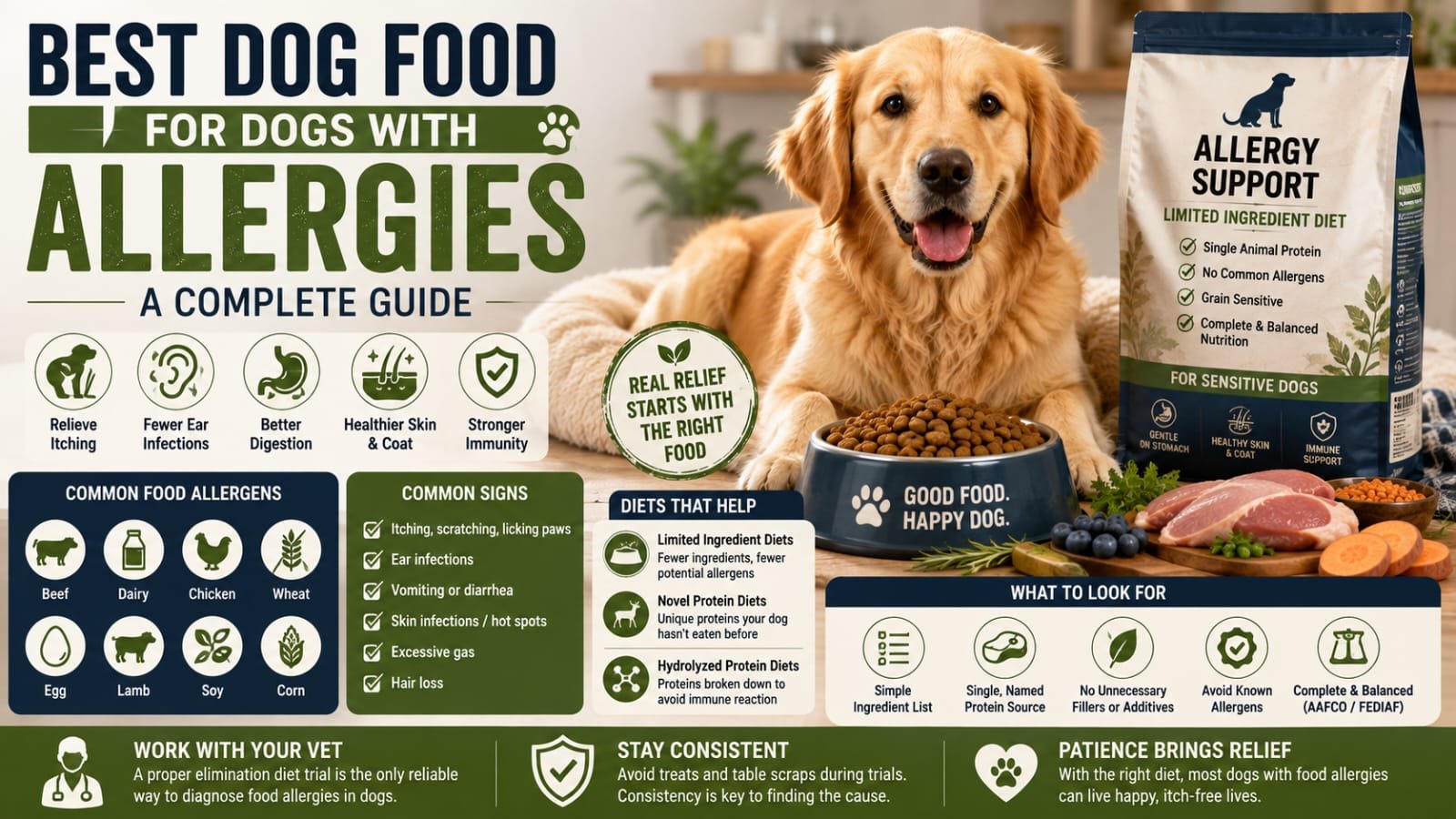
Persistent itching, particularly around the ears, paws, face, and belly
Recurrent ear infections that don’t fully resolve with treatment
Chronic licking or chewing at paws
Digestive symptoms — vomiting, diarrhea, or excessive gas
Skin infections or hot spots
Hair loss in affected areas from constant scratching
Symptoms can develop even in dogs who have eaten the same food for years, since allergies often develop over time with repeated exposure rather than appearing immediately.
The Most Common Food Allergens for Dogs
Contrary to popular belief, grains are not the most common culprit behind food allergies in dogs. The most frequently identified allergens include:
Beef
Dairy
Chicken
Wheat
Egg
Lamb
Soy
Protein sources, particularly beef, dairy, and chicken, account for the large majority of diagnosed food allergies in dogs — which is worth knowing, since so much pet food marketing focuses on grain-free formulas when the actual allergen is often the protein source itself.
How Food Allergies Are Actually Diagnosed
The only reliable way to diagnose a food allergy is through an elimination diet trial, conducted over 8–12 weeks under veterinary guidance. This involves feeding your dog a novel protein and carbohydrate source they’ve never eaten before, or a hydrolyzed protein diet where proteins are broken down into pieces too small for the immune system to recognize as a threat. If symptoms improve significantly during this trial, the vet may then reintroduce specific ingredients one at a time to identify the exact trigger.
Blood and saliva allergy tests marketed directly to pet owners are widely available but are generally considered unreliable by veterinary dermatologists, since they haven’t been shown to accurately predict true food allergies in controlled studies. An elimination diet remains the gold standard, even though it requires more patience.
Types of Diets Used for Dogs with Food Allergies
Limited Ingredient Diets (LID)
These diets use a short, simple ingredient list with a single protein and carbohydrate source, making it easier to identify what’s causing a reaction and reducing the chance of exposure to unnecessary allergens. LIDs are often a good starting point if you suspect — but haven’t confirmed — a food allergy.
Novel Protein Diets
These use protein sources your dog hasn’t been exposed to before, such as venison, duck, kangaroo, or rabbit, on the theory that the immune system hasn’t had the chance to develop a reaction to something new. Novel protein diets are commonly used both diagnostically and as a long-term solution once an allergen is identified.
Hydrolyzed Protein Diets
In these prescription diets, proteins are broken down into molecular fragments too small for the immune system to recognize and react to. These are typically only available through a vet and are considered the most reliable option for elimination diet trials, since even “novel” proteins can occasionally trigger reactions in dogs with broad sensitivities.
What to Look for When Choosing an Allergy-Friendly Dog Food
Simple, short ingredient lists — fewer ingredients mean fewer potential allergens and easier troubleshooting if symptoms return.
A single, clearly named protein source rather than a blend of multiple meats.
No unnecessary fillers or artificial additives, which can sometimes contribute to sensitivities in already-reactive dogs.
Avoid your dog’s known trigger ingredients, once identified through proper diagnosis.
Complete and balanced formulation, confirmed by an AAFCO (US) or FEDIAF (UK) statement, so you’re not sacrificing overall nutrition while managing allergies.
Common Mistakes Owners Make
Switching foods repeatedly without a plan: Constantly changing brands in search of relief, without a structured elimination process, makes it nearly impossible to identify the actual allergen and can prolong your dog’s discomfort.
Assuming grain-free means allergy-friendly: As covered in our companion article on grain-free diets, grains are a relatively uncommon allergen compared to specific proteins. A grain-free diet with chicken as the main protein won’t help a dog allergic to chicken.
Giving treats or table scraps during an elimination trial: Even small amounts of an allergenic ingredient can undermine an elimination diet trial, so strict compliance — including with treats, supplements, and flavored medications — is essential during the diagnostic period.
Not involving a vet: Self-diagnosing food allergies based on internet research alone often leads to unnecessary dietary restriction or, conversely, missing the actual allergen entirely.
Managing a Dog With Diagnosed Food Allergies Long-Term
Once you’ve identified your dog’s specific trigger, managing their diet becomes much more straightforward. Stick to the diet that resolved their symptoms, read every label carefully when purchasing treats or supplements, and inform anyone else who feeds your dog — dog walkers, family members, doggy daycare — about the ingredients to avoid. Cross-contamination or accidental exposure, even in small amounts, can trigger a flare-up.
Regular check-ins with your vet can help you monitor for any new sensitivities that develop over time, since dogs can occasionally develop allergies to new proteins even after switching to an allergen-free diet.
Final Thoughts
Food allergies can be genuinely frustrating to manage, but with a structured, veterinary-guided approach, most dogs find significant relief once the trigger is identified and removed from their diet. Resist the temptation to jump between trendy diet labels and instead focus on the process: a proper elimination trial, a simple and transparent ingredient list, and ongoing collaboration with your vet. With patience, most dogs with food allergies go on to live completely comfortable, itch-free lives.