Homemade Dog Food Recipes: A Vet-Informed Guide for Owners
Cooking for your dog can feel like one of the most caring things you can do full control over every ingredient, no mystery fillers, no recalls to worry about. But homemade dog food is also one of the easiest well-intentioned decisions to get badly wrong, nutritionally speaking. This guide walks through what you actually need to know before you start cooking for your dog, including the risks, the essentials of a balanced recipe, and practical guidance for getting it right.
Why Owners Choose to Make Homemade Dog Food
Owners typically turn to homemade diets for a few common reasons: a dog with a health condition requiring a highly specific diet, food allergies that make commercial options difficult, a desire for more control over ingredient quality, or simply wanting to bond with their dog through cooking. Whatever the motivation, homemade feeding can be done safely and successfully but it requires more diligence than most owners initially expect.
The Core Challenge: Nutritional Balance
This is the single most important thing to understand about homemade dog food: dogs have precise nutritional requirements for protein, fat, calcium, phosphorus, and a long list of vitamins and trace minerals, and getting even one of these significantly wrong — especially over months or years — can lead to serious health problems. Studies analyzing homemade dog food recipes found online have repeatedly shown that the vast majority are missing essential nutrients or have imbalanced ratios, even when written by well-meaning sources.
This doesn’t mean homemade feeding is a bad idea — it means it needs to be approached with the same rigor a nutrition label brings to commercial food, not simply “chicken, rice, and vegetables” repeated every day.
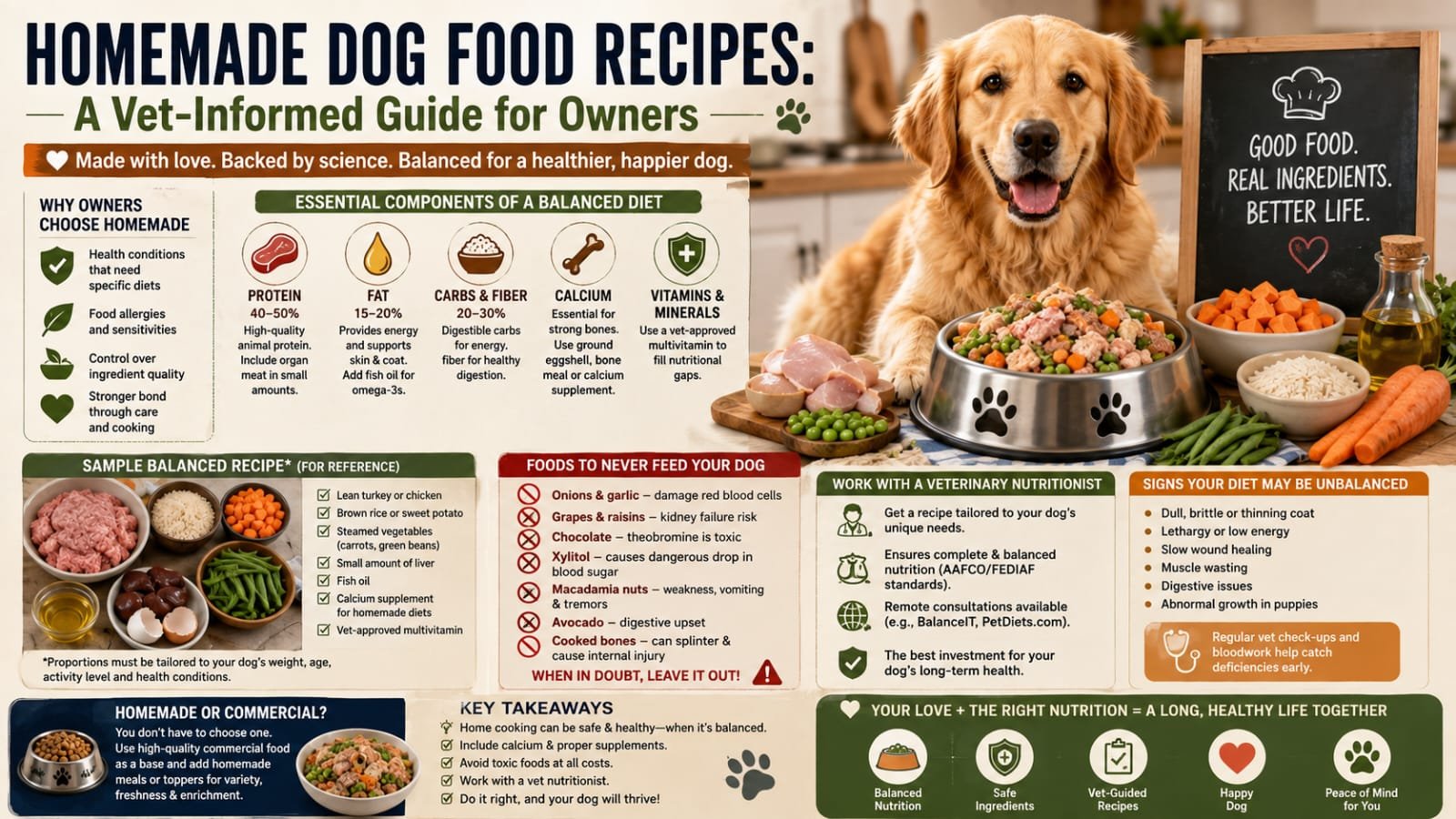
Essential Components of a Balanced Homemade Diet
Protein (Roughly 40–50% of the diet)
High-quality animal protein should form the foundation of any homemade dog food recipe. Good sources include chicken, turkey, beef, lamb, and fish. Organ meat, particularly liver, should be included in smaller amounts as it’s extremely nutrient-dense, but too much can cause vitamin A toxicity, so moderation matters.
Fat (Roughly 15–20%)
Fat provides concentrated energy and supports skin and coat health. Sources include chicken skin, fish oil, and small amounts of vegetable oils. Fish oil in particular provides omega-3 fatty acids that support joint and cognitive health.
Carbohydrates and Fiber (Roughly 20–30%)
While not strictly essential, digestible carbohydrates provide energy and fiber supports healthy digestion. Good options include rice, oats, sweet potato, and pumpkin.
Calcium
This is the nutrient most commonly missing from homemade diets, and its absence can cause serious skeletal problems over time, particularly in growing puppies. Calcium can be added through ground eggshell, a calcium supplement, or bone meal specifically formulated for pets. Without a deliberate calcium source, a homemade diet built primarily from muscle meat will almost always be significantly deficient.
Essential Vitamins and Minerals
Even a well-balanced recipe with quality protein, fat, and carbohydrates will likely be missing certain trace minerals and vitamins like zinc, copper, vitamin E, and vitamin D that are naturally present in commercial diets through fortification. A veterinary-formulated multivitamin supplement designed specifically for homemade dog diets is often necessary to fill these gaps.
A Sample Balanced Recipe (For Reference Only)
The recipe below illustrates general proportions, but should not replace a recipe formulated or reviewed by a veterinary nutritionist for your specific dog’s needs, weight, and health status.
Basic Homemade Dog Food (illustrative example):
Lean ground turkey or chicken
Brown rice or sweet potato
Steamed carrots and green beans
A small amount of liver
Fish oil
A calcium supplement formulated for homemade pet diets
A veterinary-approved multivitamin supplement
The proportions and specific quantities should be tailored to your dog’s weight, age, activity level, and any health conditions which is exactly why working with a veterinary nutritionist, even for a single consultation, is so valuable when starting homemade feeding.
Foods That Are Toxic to Dogs Never Include These
Before cooking anything for your dog, it’s critical to know which common human foods are dangerous:
Onions and garlic can cause damage to red blood cells
Grapes and raisins linked to acute kidney failure in dogs
Chocolate contains theobromine, toxic to dogs
Xylitol (found in some peanut butters and baked goods) causes a dangerous, rapid drop in blood sugar
Macadamia nuts can cause weakness, vomiting, and tremors
Avocado contains persin, which can cause digestive upset
Cooked bones can splinter and cause internal injury, unlike raw bones
Always double-check any new ingredient before adding it to a homemade recipe, even ones that seem harmless.
Working With a Veterinary Nutritionist
This is genuinely the single best investment you can make if you’re committed to homemade feeding long-term. A board-certified veterinary nutritionist can formulate a recipe tailored specifically to your dog’s breed, age, weight, activity level, and any health conditions, ensuring the diet is complete and balanced rather than just “reasonably healthy-looking.” Many offer remote consultations, making this accessible even if there isn’t a specialist near you. Services like BalanceIT and PetDiets.com, both used by vets in the US and UK, provide recipes formulated to meet AAFCO and FEDIAF standards.
Signs Your Homemade Diet Might Be Unbalanced
If you’re already feeding a homemade diet, watch for these warning signs, which can indicate a nutritional gap:
Dull, brittle, or thinning coat
Lethargy or reduced energy
Slow wound healing
Muscle wasting despite adequate calorie intake
Digestive issues that don’t resolve
In puppies, abnormal growth or bone development
Regular veterinary check-ups, including bloodwork, can help catch nutritional deficiencies before they become serious health problems.
Homemade vs Commercial: Finding the Right Balance
Homemade feeding doesn’t have to be all-or-nothing. Some owners choose to feed a high-quality commercial diet as the nutritional foundation and supplement with homemade meals or fresh toppers a few times a week — getting some of the benefits of home cooking (variety, freshness, bonding) without the full burden of formulating every nutrient correctly, every single day.
Final Thoughts
Homemade dog food can be a wonderful way to care for your dog, but it demands more precision than intuition alone can provide. The biggest mistake owners make isn’t choosing to cook for their dog — it’s assuming that “healthy-looking” ingredients automatically add up to a nutritionally complete diet. Take the time to work with a veterinary nutritionist, include a genuine calcium source and appropriate supplementation, and stay vigilant about toxic foods. Done properly, homemade feeding can be a safe, rewarding way to nourish your dog for years to come.