How to Store Dog Food Properly: A Complete Freshness and Safety Guide
You’ve done the research, chosen a high-quality food, and calculated the perfect portions but if that food isn’t stored properly, all that effort can be undermined by nutrient degradation, rancid fats, or even bacterial contamination. Proper dog food storage is one of the most overlooked aspects of feeding, yet it directly affects both nutritional quality and your dog’s safety. Here’s exactly how to do it right.
Why Storage Matters More Than Most Owners Realize
Dog food, whether dry or wet, is a perishable product from the moment it’s manufactured. Exposure to air, light, heat, and moisture accelerates the breakdown of fats (leading to rancidity), degrades vitamins, and can create conditions favorable for bacterial or mold growth. Even sealed, unopened bags and cans have a shelf life, and once opened, that clock accelerates considerably. Poor storage doesn’t always produce obvious signs of spoilage sometimes the food simply loses nutritional potency without any noticeable change in smell or appearance, meaning your dog could be eating less nutritious food without any obvious warning signs.
Storing Dry Kibble
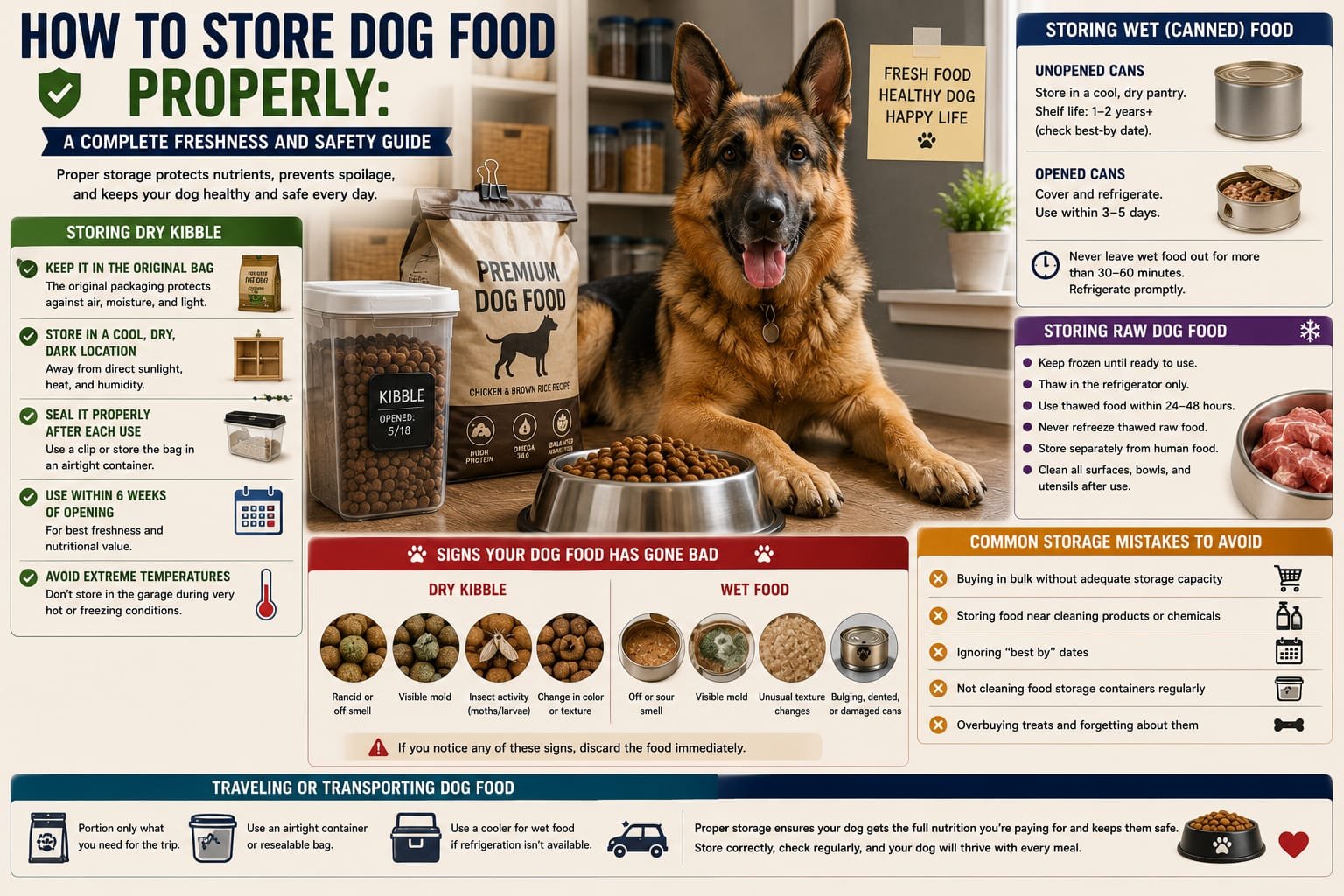
Keep It in the Original Bag
This might surprise some owners who prefer transferring kibble into a decorative container, but the original packaging is specifically designed with a barrier layer to protect against oxygen, moisture, and light all of which degrade food quality over time. If you prefer using a storage container for convenience, keep the food in its original bag and place that bag inside the container, rather than pouring kibble directly into the container.
Store in a Cool, Dry, Dark Location
Heat and light both accelerate the oxidation of fats in kibble, leading to rancidity which not only reduces nutritional value but can also make the food less palatable and, in some cases, potentially harmful if significantly rancid. A pantry, cupboard, or garage storage area (as long as it doesn’t experience extreme temperature swings) is generally ideal, away from direct sunlight and heat sources like ovens or radiators.
Seal It Properly After Each Use
Every time the bag is opened, oxygen exposure begins degrading the food. Use a proper bag clip, roll the bag down tightly before sealing, or transfer the sealed inner bag into an airtight container to minimize air exposure between feedings.
Use Within 6 Weeks of Opening
Once opened, dry kibble is generally best used within about 6 weeks for optimal freshness, even if the bag’s “best by” date suggests a longer window. This is because oxidation and nutrient degradation begin accelerating from the moment the seal is broken, regardless of the original manufacturing date.
Avoid Storing in the Garage During Extreme Temperatures
While garages can work for storage in moderate climates, extreme heat in summer or freezing temperatures in winter can affect food quality and, in humid climates, increase the risk of moisture getting into the bag, which can promote mold growth.
Storing Wet (Canned) Dog Food
Unopened Cans
Store in a cool, dry pantry, away from direct sunlight. Properly stored unopened cans typically have a shelf life of 1-2 years or more, as indicated by the manufacturer’s best-by date.
Opened Cans
Once opened, wet food should be covered and refrigerated, and used within 3-5 days. A simple plastic lid made for standard can sizes, or transferring to an airtight container, works well. Always check for any off smell, discoloration, or texture change before serving refrigerated leftovers.
Never Leave Wet Food Out for Extended Periods
Unlike dry kibble, wet food’s high moisture content makes it far more hospitable to bacterial growth at room temperature. If your dog doesn’t finish a wet food meal within about 30-60 minutes (especially in warm weather), it’s safer to discard the remainder or refrigerate it promptly rather than leaving it out for grazing throughout the day.
Storing Raw Dog Food
Raw food requires the most stringent storage practices given its higher risk of bacterial contamination:
- Keep frozen until ready to use, thawing only what you need in the refrigerator, never at room temperature
- Use thawed raw food within 24-48 hours, and never refreeze raw food that has already been thawed
- Store separately from human food in the refrigerator or freezer to avoid cross-contamination
- Clean and disinfect all surfaces, bowls, and utensils that come into contact with raw food immediately after use
Signs Your Dog Food Has Gone Bad
Even with proper storage, it’s worth knowing the signs that food has spoiled and should be discarded rather than fed:
Dry kibble:
- A rancid, “off,” or overly strong oily smell, different from its normal fresh scent
- Visible mold, which can appear as fuzzy spots, often greenish, white, or black
- Insect activity, such as small moths or larvae, which can indicate the food has been stored too long or improperly sealed
- A noticeable change in color or texture
Wet food:
- Any bulging, dented, or damaged cans, which can indicate bacterial contamination even before opening
- An off or sour smell upon opening
- Visible mold
- Unusual texture changes after refrigeration
If you notice any of these signs, discard the food immediately rather than risking your dog’s health to avoid waste.
Common Storage Mistakes to Avoid
Buying in bulk without adequate storage capacity: While buying larger bags can be more economical, if you can’t use the food within roughly 6 weeks of opening, you may be sacrificing freshness for savings. Consider your dog’s size and how quickly they’ll realistically go through a large bag before purchasing.
Storing food near cleaning products or chemicals: Kibble can absorb strong odors from nearby chemicals, pesticides, or cleaning products, which can affect palatability and potentially introduce contamination risk.
Ignoring “best by” dates: While properly stored, sealed food remains safe for a reasonable period past printed dates in many cases, it’s still wise to prioritize using older stock first and avoid purchasing food that’s already close to its best-by date at the time of purchase.
Not cleaning food storage containers regularly: If you use a storage container (with the original bag inside, as recommended), clean it periodically to prevent oil residue buildup and rancid odors from affecting new bags of food.
Overbuying treats and forgetting about them: Treats are often stored for longer periods than main food, and can go stale or rancid if forgotten in a cupboard for months check treat freshness periodically, just as you would main food.
Traveling or Transporting Dog Food
If you’re traveling with your dog, portion out only what you’ll need for the trip into a sealed, airtight container or resealable bag, rather than bringing an entire large bag exposed to temperature fluctuations and inconsistent sealing throughout the journey. For wet food, bring a cooler if refrigeration won’t be readily available, particularly for longer trips.
Final Thoughts
Proper dog food storage might seem like a minor detail compared to choosing the right formula, but it directly affects whether your dog actually receives the nutritional value you’re paying for and whether that food remains safe to eat. Keep dry food in its original bag, sealed tightly, in a cool and dark location, and use it within about 6 weeks of opening. Refrigerate opened wet food and use it promptly, and handle raw food with the strict hygiene it requires. These simple habits ensure that all the careful thought you put into choosing your dog’s food actually translates into the nutrition and safety your dog deserves.