Dog Food for Sensitive Stomachs: A Complete Guide
Few things are more frustrating or messier than a dog with a sensitive stomach. If you’re dealing with recurring vomiting, soft stools, excessive gas, or a dog who seems to react badly to even minor diet changes, you know how much it can affect both your dog’s comfort and your daily routine. This guide covers what causes digestive sensitivity in dogs, how to identify triggers, and how to choose a diet that actually helps.
What Does “Sensitive Stomach” Actually Mean?
“Sensitive stomach” isn’t a formal medical diagnosis it’s a general term used to describe dogs who experience frequent digestive upset in response to their diet, even when eating food that most dogs tolerate perfectly well. This can stem from several underlying causes, including food intolerances, food allergies, enzyme deficiencies, an imbalanced gut microbiome, or an underlying gastrointestinal condition that hasn’t yet been formally diagnosed.
Common Signs of a Sensitive Stomach
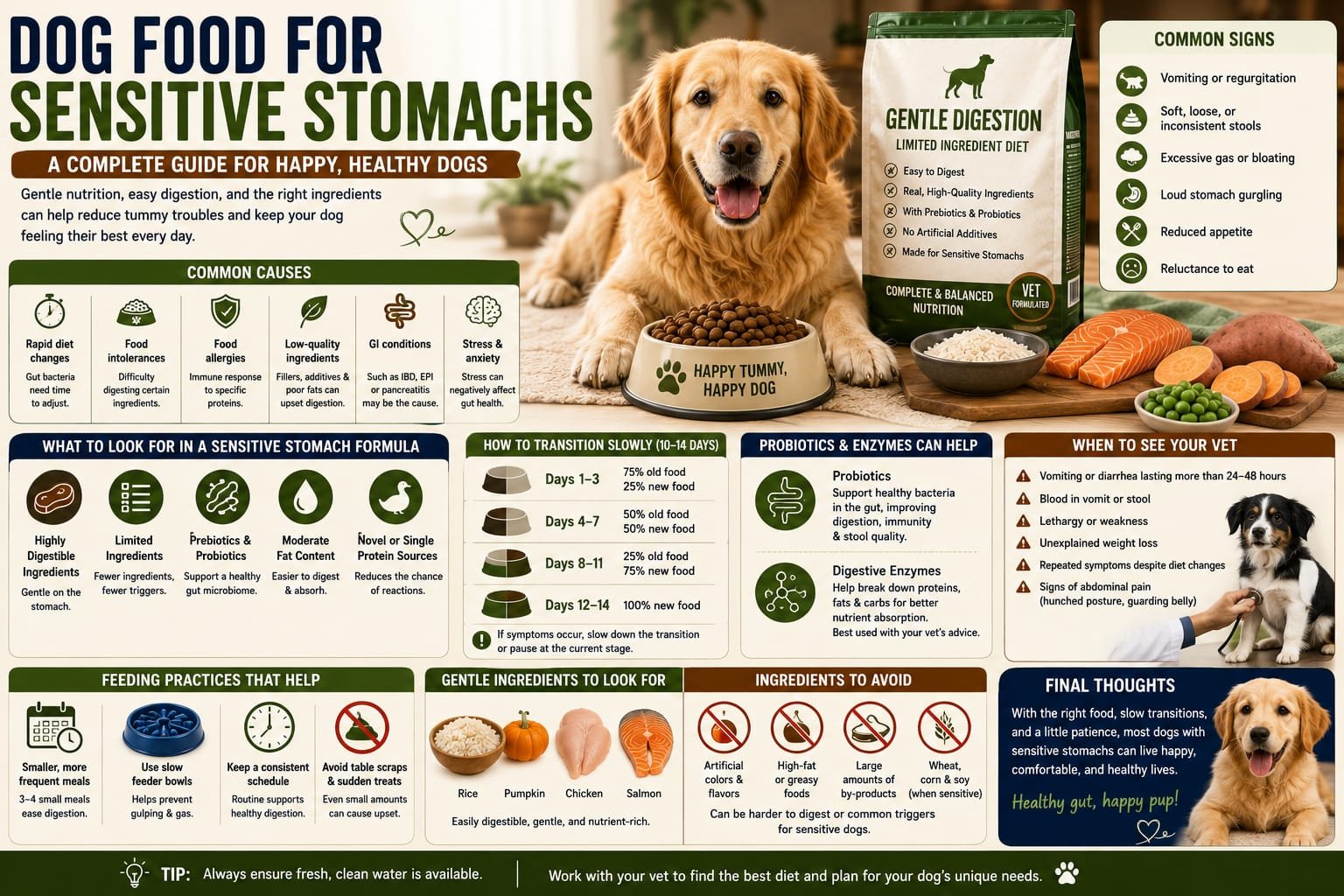
Frequent vomiting or regurgitation, particularly after meals
Soft, loose, or inconsistent stools
Excessive gas or bloating
Loud stomach gurgling
Reduced appetite or reluctance to eat
Occasional refusal of food that was previously tolerated well
If these symptoms are severe, persistent, or accompanied by weight loss, lethargy, or blood in the stool, it’s important to see a vet promptly rather than assuming it’s simply a “sensitive stomach” issue that diet alone will resolve, since these can also indicate more serious underlying conditions.
Common Causes of Digestive Sensitivity
Rapid diet changes: Switching foods too quickly is one of the most common causes of temporary digestive upset, since a dog’s gut bacteria need time to adjust to new ingredients.
Food intolerances: Some dogs struggle to properly digest certain ingredients, even without a true allergic response, leading to gas, loose stools, or discomfort.
Food allergies: As discussed in our companion article on allergies, immune-mediated reactions to specific proteins can manifest as digestive symptoms alongside, or instead of, skin issues.
Low-quality or highly processed ingredients: Diets with excessive fillers, artificial additives, or poor-quality fat sources can be harder for some dogs to digest consistently.
Underlying gastrointestinal conditions: Conditions like inflammatory bowel disease (IBD), exocrine pancreatic insufficiency (EPI), or chronic pancreatitis can cause ongoing digestive symptoms that require targeted veterinary treatment alongside dietary management.
Stress: Just like humans, dogs can experience digestive upset triggered or worsened by stress, anxiety, or major changes in routine or environment.
What to Look for in a Sensitive Stomach Formula
Highly Digestible Ingredients
Look for named, high-quality protein sources and easily digestible carbohydrates like rice, which is generally gentler on the digestive system than some other carbohydrate sources.
Limited Ingredient Lists
Fewer ingredients mean fewer potential triggers and make it easier to identify what might be causing a reaction if symptoms persist or return.
Added Prebiotics and Probiotics
These support a healthy gut microbiome, which plays a significant role in digestion and can help reduce symptoms like gas and loose stools over time.
Moderate Fat Content
While fat is an essential nutrient, excessively high-fat diets can be harder for sensitive dogs to digest and may contribute to symptoms, particularly in dogs prone to pancreatitis.
Novel or Single Protein Sources
If a food allergy or intolerance is suspected, a novel protein your dog hasn’t eaten before (such as duck, venison, or rabbit) can help reduce the chance of triggering a reaction while symptoms resolve.
How to Transition to a New Food Without Triggering Symptoms
Since diet changes themselves are a common trigger for digestive upset, transitioning slowly is especially important for dogs with sensitive stomachs. A gradual transition over 10–14 days, longer than the standard 7-day recommendation for most dogs, gives their digestive system extra time to adjust:
Days 1–3: 75% old food, 25% new food
Days 4–7: 50% old food, 50% new food
Days 8–11: 25% old food, 75% new food
Days 12–14: 100% new food
If symptoms appear at any stage, slow the transition down further or pause at the current ratio for a few extra days before continuing.
The Role of Probiotics and Digestive Enzymes
Probiotic supplements, formulated specifically for dogs, can help support a healthy balance of gut bacteria, which plays a meaningful role in digestion, immune function, and even mood regulation. Digestive enzyme supplements may also help dogs who struggle to break down fats, proteins, or carbohydrates efficiently, particularly in cases involving pancreatic insufficiency. These should ideally be recommended by your vet rather than added speculatively, since the underlying cause of digestive sensitivity affects which type of supplement is likely to help.
When to See a Vet
While many cases of digestive sensitivity can be managed successfully with diet, certain signs warrant a prompt veterinary visit:
Vomiting or diarrhea lasting more than 24–48 hours
Blood in vomit or stool
Significant lethargy or weakness
Unexplained weight loss
Repeated symptoms despite dietary changes
Signs of abdominal pain, such as a hunched posture or reluctance to be touched near the belly
These symptoms could indicate a more serious underlying condition requiring diagnostic testing and targeted treatment, rather than dietary adjustment alone.
Home Feeding Practices That Help Sensitive Stomachs
Beyond choosing the right food, a few feeding practices can make a meaningful difference:
Smaller, more frequent meals: Splitting daily food into 3–4 smaller meals rather than 1–2 large ones can reduce the digestive burden at any single sitting.
Slow feeder bowls: For dogs who eat quickly, slow feeder bowls can reduce the amount of air swallowed during eating, which contributes to gas and bloating.
Consistent feeding schedule: Feeding at the same times each day helps regulate digestion and can reduce stress-related digestive upset.
Avoiding table scraps and sudden treats: Even small amounts of unfamiliar or rich foods can trigger symptoms in a sensitive dog, so consistency across the whole household’s feeding habits matters.
Final Thoughts
Managing a dog with a sensitive stomach takes some detective work and patience, but most dogs see significant improvement once the right combination of diet, feeding practices, and (if needed) veterinary treatment is in place. Start with a highly digestible, limited-ingredient formula, transition slowly, and don’t hesitate to involve your vet, particularly if symptoms are persistent or severe. With the right approach, even dogs with a history of chronic digestive issues can go on to enjoy comfortable, symptom-free daily life.