Best Dog Food Brands: An Honest Comparison Guide
With hundreds of dog food brands competing for shelf space and marketing dollars, choosing the right one for your dog can feel overwhelming. Rather than ranking brands by hype or price alone, this guide focuses on what actually matters when evaluating dog food quality helping you build a framework you can apply to any brand, current or future, rather than a list that goes stale the moment a company reformulates.
Why We’re Not Just Naming “The Best” Brand
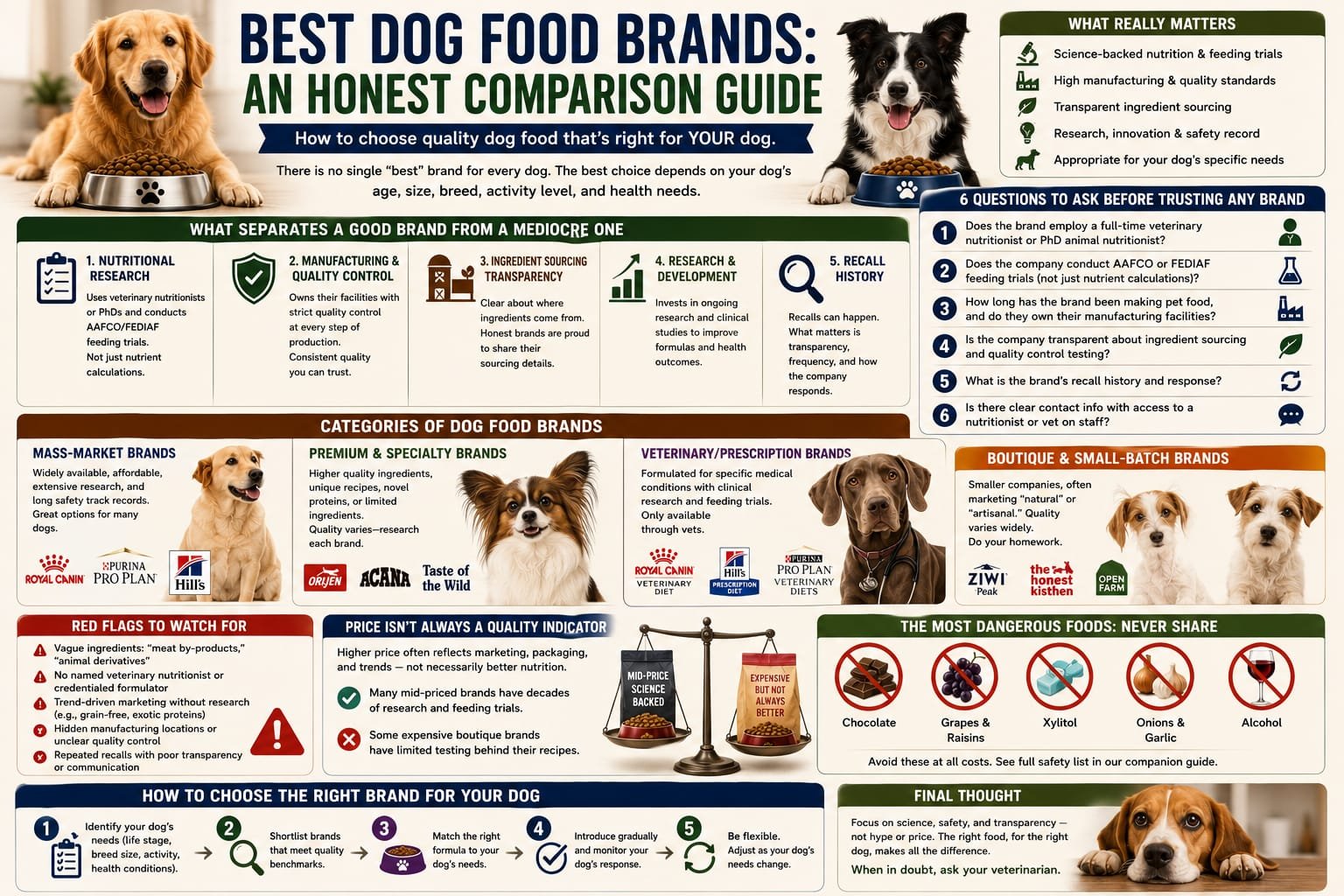
Here’s an important truth the pet food industry doesn’t always make obvious: there is no single “best” dog food brand for every dog. The right choice depends on your dog’s breed, age, size, activity level, and any specific health conditions. A brand that’s excellent for a senior Chihuahua with dental issues may not be ideal for an active young Labrador. Instead of chasing a “best of” list, it’s far more useful to understand how to evaluate quality yourself.
What Actually Separates a Good Brand From a Mediocre One
1. Nutritional Research and Formulation Standards
Reputable brands employ veterinary nutritionists or animal nutrition PhDs to formulate their recipes, and conduct AAFCO (US) or FEDIAF (UK) feeding trials rather than relying solely on nutrient calculations on paper. Feeding trials involve actually testing the food on live animals over time to confirm real-world digestibility and nutritional adequacy, which is a meaningfully higher bar than formulas that only meet calculated nutrient minimums.
2. Manufacturing Standards and Quality Control
Established brands with their own manufacturing facilities (rather than outsourcing to third-party co-packers with inconsistent oversight) tend to have more consistent quality control. Look for brands that are transparent about where their food is made and what quality testing occurs at each stage of production.
3. Ingredient Sourcing Transparency
Good brands are typically willing to disclose where they source key ingredients, particularly protein sources, and many now provide detailed sourcing information directly on their websites. This transparency is a reasonable proxy for a company’s overall quality standards.
4. Research and Development Investment
Brands that invest in ongoing research including clinical studies on their formulas’ health outcomes tend to produce more consistently reliable products than brands relying purely on trend-driven marketing without underlying science.
5. Recall History
While recalls happen even to reputable brands (and can actually indicate good quality control catching issues before they reach a wider scale), it’s worth understanding the nature and frequency of any recalls a brand has had. A pattern of repeated, serious recalls related to contamination or nutritional deficiencies is a more meaningful red flag than a single isolated incident that was promptly and transparently addressed.
Categories of Dog Food Brands
Mass-Market Brands
Widely available in supermarkets and big-box stores, these brands are typically more affordable and have decades of research and feeding trials behind their formulas, along with established manufacturing infrastructure. They’re often unfairly dismissed by some pet owners as “lower quality” simply due to their accessibility and price point, but many have strong nutritional science backing their recipes and long track records of safety.
Premium and Specialty Brands
These brands often emphasize higher-quality named protein sources, limited ingredient formulas, or specific dietary approaches (grain-free, raw, novel protein). They tend to be more expensive and often market heavily toward perceived “natural” or “holistic” positioning. Quality varies considerably within this category — some have excellent nutritional research behind them, while others are newer companies without the same depth of feeding trial history.
Veterinary/Prescription Brands
Available only through veterinarians, these brands formulate diets for specific medical conditions kidney disease, food allergies, weight management, digestive disorders backed by clinical research and typically extensive feeding trials. If your dog has a diagnosed health condition, these brands often represent the most rigorously tested option for their specific formulas.
Boutique and Small-Batch Brands
Smaller companies, often newer to the market, sometimes with strong marketing around “natural” or “artisanal” positioning. Quality varies widely some produce excellent, well-researched food, while others may lack the nutritional expertise, feeding trial history, and quality control infrastructure of more established companies. This category was also disproportionately represented in the FDA’s DCM investigation, which is worth keeping in mind if you’re considering a newer or smaller brand.
Questions to Ask When Evaluating Any Brand
- Does the brand employ a full-time veterinary nutritionist or PhD animal nutritionist?
- Does the company conduct AAFCO or FEDIAF feeding trials, or only formulate to meet calculated nutrient minimums?
- How long has the brand been manufacturing pet food, and do they own their manufacturing facilities?
- Is the company transparent about ingredient sourcing and quality control testing?
- What is the brand’s recall history, and how did they respond?
- Does the brand provide clear contact information for nutritional questions, ideally with access to a nutritionist or vet on staff?
A brand that can answer these questions transparently and confidently is generally a safer bet than one that relies primarily on marketing language like “natural,” “holistic,” or “premium” without substantive backing.
Red Flags to Watch For
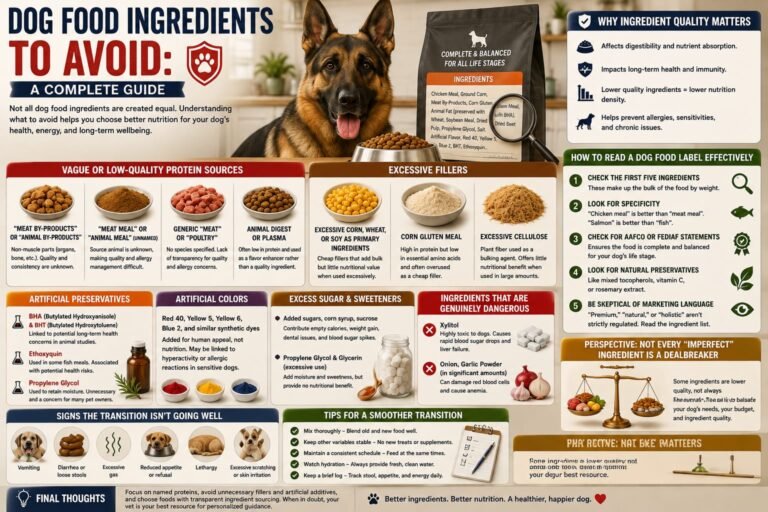
- Vague ingredient lists using terms like “meat by-products” or “animal derivatives” without further specification
- No named veterinary nutritionist or credentialed formulator involved in recipe development
- Marketing heavily focused on trends (grain-free, exotic proteins) without corresponding nutritional research
- Difficulty finding basic information about manufacturing location or quality control practices
- A pattern of recalls without transparent, thorough corrective action
Price Isn’t Always a Reliable Indicator of Quality
It’s a common assumption that more expensive food is automatically better, but price often reflects marketing spend, packaging, and ingredient trends as much as it reflects actual nutritional quality or research investment. Some of the most extensively researched, feeding-trial-tested formulas come from established mid-priced brands with decades of nutritional science behind them, while some expensive boutique brands have limited formulation testing behind their recipes.
How to Choose the Right Brand for Your Specific Dog
Rather than searching for a universal “best,” work through this process:
- Identify your dog’s specific needs life stage, breed size, any health conditions or sensitivities
- Shortlist brands that meet quality benchmarks feeding trials, nutritionist involvement, manufacturing transparency
- Match formulas to your dog’s specific requirements puppy vs adult vs senior, breed size formulas, or condition-specific needs
- Introduce gradually and monitor your dog’s response coat condition, energy, stool quality, and overall wellbeing over several weeks
- Stay open to adjusting the “best” brand for your dog may change as they age or if health needs evolve
Final Thoughts
Rather than chasing whatever brand is trending or assumed to be “the best,” focus on the underlying markers of quality: nutritional research, feeding trials, manufacturing transparency, and ingredient sourcing. A brand that checks these boxes, matched appropriately to your dog’s specific life stage and health needs, is far more likely to serve your dog well than one chosen purely on marketing appeal or price point. When in doubt, your vet can offer guidance based on your dog’s individual health profile and any conditions that might steer you toward or away from particular brands or formulations.