Grain-Free Dog Food: Is It Really Right for Your Dog?
Grain-free dog food exploded in popularity over the past decade, riding a wave of pet owners wanting to feed their dogs the way they feed themselves — clean, natural, and free from what many perceived as “filler” ingredients. But in recent years, the conversation has shifted dramatically, with health concerns prompting many owners to ask a very different question: is grain-free food actually safe? Here’s an evidence-based, balanced look at what grain-free dog food really is, who it might benefit, and what risks you need to know about before switching.
What Does “Grain-Free” Actually Mean?
Grain-free dog food simply means the formula excludes common grains like wheat, corn, rice, barley, and oats. Instead of these ingredients, grain-free foods typically use alternative carbohydrate sources such as:
Peas and pea protein
Lentils
Potatoes and sweet potatoes
Tapioca
Chickpeas
Importantly, “grain-free” does not mean “carbohydrate-free” or “low-carb” — many grain-free formulas simply swap one carbohydrate source for another, which is a common misconception among pet owners.
Why Did Grain-Free Food Become So Popular?
The rise of grain-free diets was driven by a few converging trends. First, the “ancestral diet” movement encouraged owners to think of dogs as closer to wolves nutritionally, and grains were framed as an unnatural addition driven by the convenience of commercial pet food manufacturing rather than genuine canine need. Second, grain allergies and sensitivities, while relatively uncommon in dogs, received outsized attention in pet food marketing, leading many owners to assume grains were a common cause of itching, digestive upset, or other symptoms. Third, the human “gluten-free” trend arguably influenced pet food purchasing decisions, with owners projecting their own dietary preferences onto their pets.
The DCM Controversy: What You Need to Know
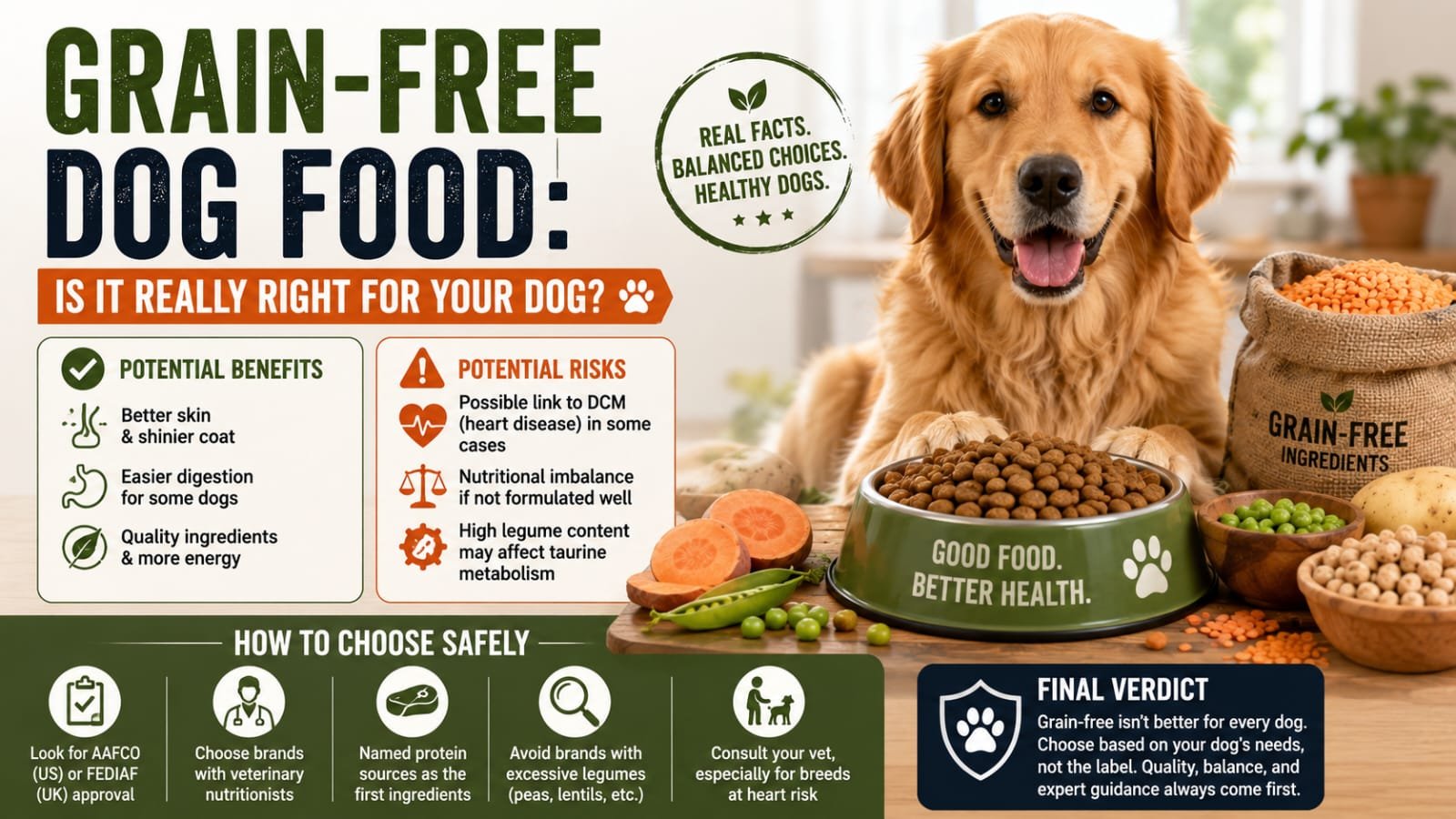
In 2018, the FDA in the United States began investigating a possible link between grain-free diets and canine dilated cardiomyopathy (DCM), a serious heart condition that can be fatal if untreated. The investigation found a higher-than-expected number of DCM cases in dog breeds not typically predisposed to the condition, and many of these dogs were eating grain-free diets, particularly those high in peas, lentils, and other legumes as primary ingredients.
It’s important to understand what this investigation did and didn’t establish. It did not prove that grain-free food directly causes DCM in all dogs. What it suggested was a possible association, particularly in diets where legumes (like peas and lentils) made up a very high proportion of the ingredient list, potentially affecting taurine metabolism — an amino acid critical for heart function. Research is still ongoing, and the exact mechanism remains under investigation.
Following this, the FDA published a list of specific brands most frequently reported in DCM cases, and many pet owners understandably grew cautious about grain-free diets as a category. In the UK, the Royal Veterinary College and other bodies have also monitored this issue closely, generally advising a cautious, evidence-based approach rather than blanket avoidance or blanket endorsement of grain-free formulas.
So Is Grain-Free Food Dangerous?
Not necessarily — but it’s not automatically superior either, which is the key myth this article aims to correct. For the vast majority of dogs, grains are not inherently harmful, and true grain allergies are actually less common than protein allergies (to sources like beef or chicken). Most dogs digest grains like rice and oats perfectly well, and these ingredients can provide useful fiber, energy, and nutrients.
Given the DCM concerns, many veterinary nutritionists now recommend:
Only choosing grain-free formulas if your dog has a diagnosed grain sensitivity or allergy, confirmed through elimination diet testing, not just suspected based on symptoms
Prioritizing reputable brands that have their formulas developed by veterinary nutritionists and conduct feeding trials
Avoiding grain-free diets where peas, lentils, or other legumes appear multiple times in the first several ingredients, which can indicate a high overall legume content
Discussing with your vet if your dog is a breed with any predisposition to heart conditions, such as Golden Retrievers, before choosing a grain-free formula
Signs Your Dog Might Actually Have a Grain Sensitivity
True grain allergies are relatively rare, but they do exist. Signs can include:
Chronic itching or skin irritation, particularly around the ears, paws, and belly
Recurrent ear infections
Digestive upset — vomiting, diarrhea, or excessive gas
Poor coat condition despite adequate grooming
If you suspect a grain allergy, the gold standard for diagnosis is an elimination diet conducted under veterinary guidance, not simply switching to a grain-free product and observing results, since improvement could be coincidental or due to other formula changes happening at the same time.
Who Might Genuinely Benefit From Grain-Free Food?
Dogs with a confirmed grain allergy or sensitivity, diagnosed through proper testing
Dogs with certain digestive conditions where a vet has specifically recommended a limited-ingredient or novel carbohydrate diet
Dogs on a prescription diet for an unrelated condition that happens to be formulated without grains
For everyone else, grain-inclusive diets from reputable manufacturers remain a perfectly healthy, often more thoroughly researched option.
How to Choose Any Dog Food Safely, Grain-Free or Not
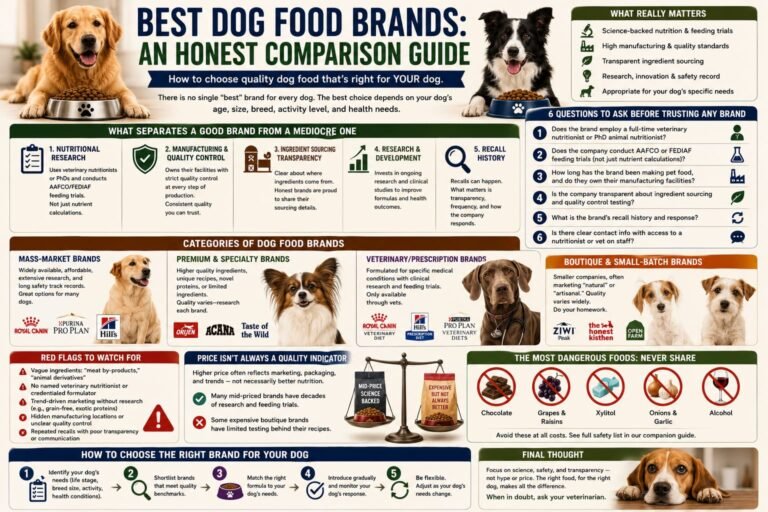
Rather than fixating on the grain-free label itself, focus on these broader quality indicators:
Look for AAFCO (US) or FEDIAF (UK) statements confirming the food is complete and balanced for your dog’s life stage.
Choose brands that employ veterinary nutritionists and conduct feeding trials rather than formulating recipes purely based on marketing trends.
Check for named protein sources as the first ingredients, rather than vague terms.
Be wary of “boutique” brands with limited manufacturing history or transparency about their formulation process, as these were disproportionately represented in early DCM reports.
Consult your vet, particularly if your dog is a breed with any predisposition to cardiac issues, before choosing a grain-free diet.
Grain-Free Food in the UK vs the US
While the DCM investigation originated in the US, UK veterinary bodies have echoed similar caution, recommending owners not switch to grain-free diets without good reason and to be particularly mindful of legume-heavy formulas. Regulatory bodies in both countries continue to monitor the situation, and further updates may refine these recommendations over time, so it’s worth staying informed rather than assuming the current guidance is final.
Final Verdict
Grain-free dog food isn’t inherently dangerous, but it’s also not inherently healthier than grain-inclusive food for the average dog — despite what marketing has implied for years. The decision to feed grain-free should be driven by an actual, diagnosed need, not a general assumption that grains are bad for dogs. If your dog doesn’t have a specific grain sensitivity, a high-quality grain-inclusive diet from a reputable brand is likely the safer, well-researched choice. If you do have reason to consider grain-free, do so thoughtfully — choose established brands, avoid excessive legume content, and keep your vet involved in the decision, especially for breeds with any cardiac risk factors.