Best Small Breed Dog Food: What Every Owner Should Know
Best Small Breed Dog Food: What Every Owner Should Know
Small dogs might be little in size, but their nutritional needs are anything but simple. From faster metabolisms to a higher risk of dental disease and blood sugar crashes, small breed dogs like Chihuahuas, Yorkshire Terriers, Pomeranians, and Dachshunds require thoughtful, breed-appropriate feeding. This guide covers everything you need to know to keep your small dog healthy, energetic, and thriving at every life stage.
Why Small Breeds Need Different Nutrition
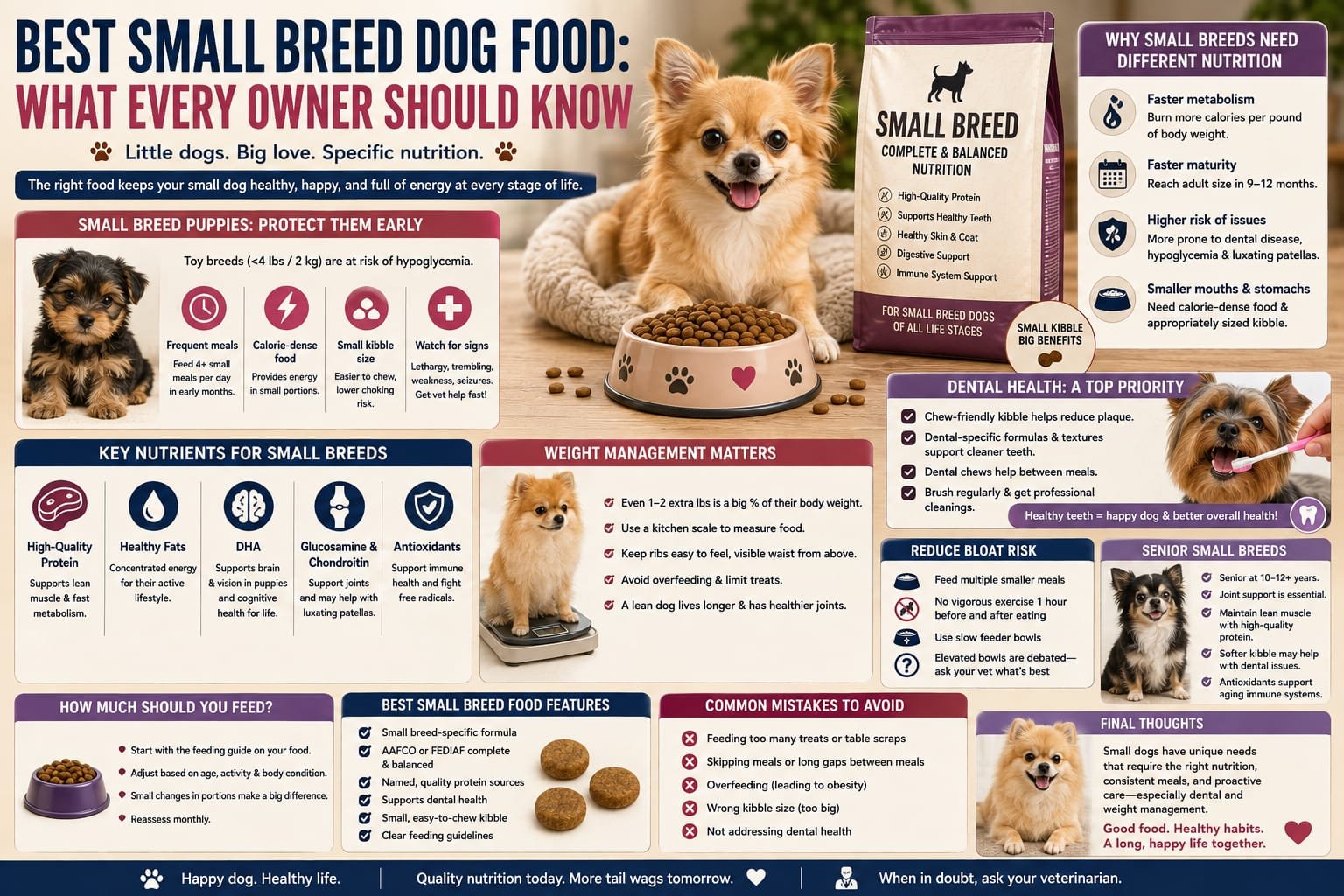
It’s tempting to assume that small dogs just need smaller portions of regular dog food, but the differences go well beyond quantity. Small breed dogs have notably faster metabolisms relative to their body size compared to larger dogs, meaning they burn energy more quickly and require more calories per pound of body weight. They also mature much faster, reaching adult size within 9–12 months in many cases, compared to the 18–24 months it can take large breeds. On top of this, small breeds face a higher risk of certain health issues including dental disease, hypoglycemia, and luxating patellas that diet can help manage or mitigate.
Small Breed Puppies: Fast Growth, Higher Risk of Hypoglycemia
Small breed puppies grow quickly and reach adult size relatively fast, which means their nutritional needs during this period are intense relative to their tiny stomachs. One of the most important considerations for small breed puppies, particularly toy breeds under 4 lbs (roughly 2kg), is the risk of hypoglycemia — a dangerous drop in blood sugar that can occur if they go too long without eating, given their limited fat and glycogen reserves.
This is why small breed puppies typically need:
Frequent small meals often 4 or more times per day in the first few months
Calorie-dense food packing sufficient energy into small portions that match their tiny stomach capacity
Small kibble size appropriately sized for their small mouths and teeth, reducing choking risk and making chewing easier
Signs of hypoglycemia in a small breed puppy include lethargy, trembling, weakness, or in severe cases, seizures this is a genuine emergency requiring immediate veterinary attention, so recognizing the risk factors and feeding preventively matters enormously for toy breed owners.
Dental Health: A Major Concern for Small Breeds
Small breed dogs are significantly more prone to dental disease than larger breeds, largely due to relatively overcrowded teeth in a small jaw, which creates more surface area for plaque and tartar to accumulate. Left unaddressed, dental disease can lead to pain, tooth loss, and even systemic health issues, as oral bacteria can enter the bloodstream and affect other organs.
Diet can play a supporting role in dental health:
Kibble size and texture some small breed formulas use kibble specifically designed to encourage chewing rather than swallowing whole, which provides more mechanical cleaning action
Dental-specific formulas some diets are formulated with a texture designed to reduce plaque and tartar buildup
Regular dental chews while not a replacement for brushing, appropriately sized dental chews can provide additional plaque control between meals
That said, diet alone isn’t sufficient for dental health regular tooth brushing and professional veterinary dental cleanings remain essential, particularly for breeds with a known predisposition to dental disease.
Higher Calorie Density Matters
Because of their fast metabolism and small stomach capacity, small breed dogs generally benefit from calorie-dense food that allows them to meet their energy needs without needing to eat unrealistically large portions relative to their size. Small breed-specific formulas are typically formulated with this in mind, packing more calories, protein, and fat per cup compared to formulas designed for larger dogs.
Key Nutrients for Small Breed Dogs
High-quality protein: Supports their faster metabolism and helps maintain lean muscle mass, which is proportionally significant even in tiny bodies.
Adequate fat content: Provides the concentrated energy small dogs need given their fast metabolic rate, while also supporting healthy skin and coat.
DHA: Particularly important during puppyhood for brain and vision development, and beneficial throughout life for cognitive health.
Appropriately sized kibble: Designed for small mouths, reducing the risk of choking and making eating more comfortable and efficient.
Small Breeds and Joint Health
While large breeds are more associated with hip and elbow dysplasia, small breeds have their own set of joint concerns — most notably luxating patella (a kneecap that slips out of place), which is particularly common in breeds like Yorkshire Terriers, Pomeranians, and Chihuahuas. While diet alone can’t prevent this structural issue, maintaining a healthy weight significantly reduces the strain on already vulnerable joints, and some owners find that adding glucosamine and chondroitin support, particularly as their small dog ages, provides some benefit.
Weight Management in Small Breeds
It might seem like small dogs have less room for excess weight to be a problem, but the opposite is often true even a pound or two of excess weight represents a much larger percentage of a small dog’s total body weight compared to a large breed, making obesity proportionally more impactful. A Chihuahua carrying an extra 2 lbs is dealing with a much bigger relative burden than a Labrador carrying the same excess weight. Regular body condition monitoring and portion control, using an accurate kitchen scale rather than estimating, help keep small breeds at a healthy weight throughout their lives.
Senior Small Breed Dogs
Small breeds tend to live considerably longer than large breeds, often reaching 14–16 years or more, and aren’t typically considered “senior” until around 10–12 years of age. As they age, small breed seniors benefit from formulas that support joint health, maintain lean muscle mass, and address the cumulative dental issues many small dogs carry into their senior years. Softer textures or smaller kibble sizes can also help senior small dogs who may be dealing with dental discomfort or tooth loss by this stage of life.
How Much Should You Feed a Small Breed Dog?
Because small breeds have such a fast metabolism relative to their size, feeding guidelines can look surprisingly generous compared to what you might expect for their tiny frame. Always start with the feeding guidelines on your specific food’s packaging as a baseline, then adjust based on regular body condition assessments remember that even small deviations in portion size can have a proportionally larger effect on a small dog’s weight compared to a large breed.
Choosing the Right Small Breed Formula
When selecting food for a small breed dog, prioritize:
Small breed-specific formulas with appropriately sized kibble and calorie-dense recipes
AAFCO (US) or FEDIAF (UK) complete and balanced statements for the appropriate life stage
Named, high-quality protein sources as primary ingredients
Formulas addressing dental health, given small breeds’ elevated risk
Appropriate portion guidance, adjusted for your individual dog’s activity level and body condition
Final Thoughts
Small breed dogs may not need much food in absolute terms, but what they do eat needs to work considerably harder for them supporting a fast metabolism, protecting against hypoglycemia in puppyhood, addressing an elevated risk of dental disease, and helping manage weight where even small excesses carry outsized impact. Choosing a small breed-specific formula, feeding appropriately sized and frequent meals, and staying attentive to dental and joint health will help your small companion live a long, comfortable, and energetic life.