Best Dog Food for Senior Dogs: What Changes as Your Dog Ages
Watching your dog grow older is bittersweet — the same goofy personality is still there, but you might start noticing they’re slower to get up, a little grayer around the muzzle, or not quite as food-motivated as they used to be. Just as puppies have distinct nutritional needs, senior dogs require a different approach to feeding, one that supports joint health, maintains lean muscle mass, and adapts to a slower metabolism. This guide covers everything you need to know about feeding your dog well in their golden years.
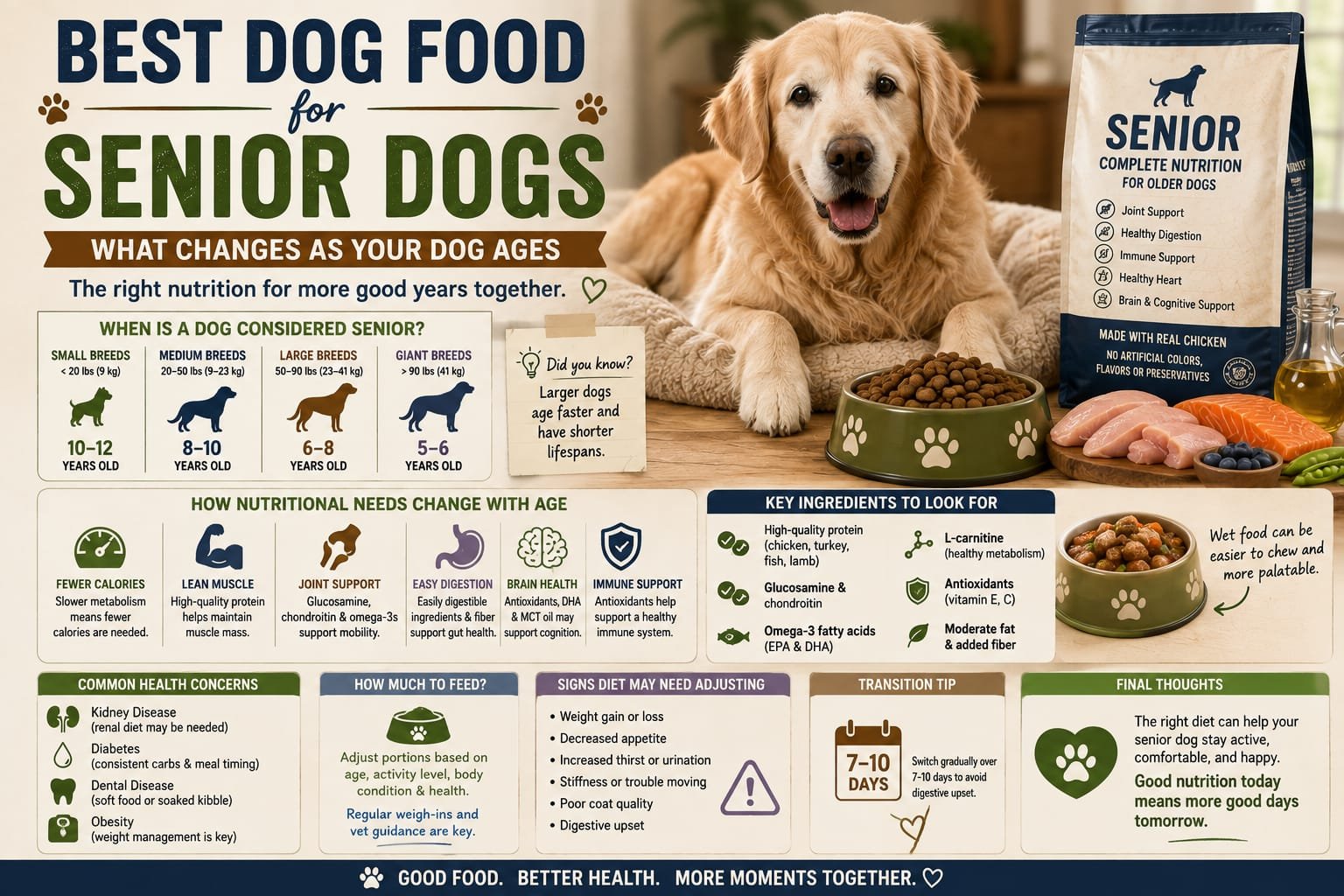
When Is a Dog Considered “Senior”?
This varies significantly by breed size, which surprises a lot of owners. Generally:
Small breeds (under 20 lbs / 9kg) are considered senior around 10–12 years old
Medium breeds (20–50 lbs / 9–23kg) around 8–10 years old
Large breeds (50–90 lbs / 23–41kg) around 6–8 years old
Giant breeds (over 90 lbs / 41kg) can be considered senior as early as 5–6 years old
Larger dogs age faster and have shorter overall lifespans, which is why breed size not just chronological age should guide when you start transitioning to a senior-specific diet.
How Nutritional Needs Change With Age
Slower Metabolism, Fewer Calories Needed
Senior dogs are typically less active than they were in their younger years, and their metabolic rate naturally declines. This means their caloric needs often decrease, and continuing to feed the same amount as when they were younger can lead to unwanted weight gain, which places additional stress on aging joints.
Maintaining Lean Muscle Mass
While calorie needs may decrease, protein needs generally do not and in fact, adequate high-quality protein becomes even more important in senior dogs to help prevent age-related muscle loss (sarcopenia). This is a common misconception; many owners assume senior dogs need less protein, but current veterinary nutrition guidance generally supports maintaining or even slightly increasing protein quality, not restricting it, unless a specific medical condition like kidney disease requires otherwise.
Joint Support
Osteoarthritis is extremely common in senior dogs, and many senior-specific formulas include glucosamine and chondroitin to support joint cartilage, along with omega-3 fatty acids (EPA and DHA) which have anti-inflammatory properties that can help ease joint discomfort.
Digestive Sensitivity
Older dogs can develop more sensitive digestive systems, and senior diets often include higher-quality, more digestible ingredients along with added fiber to support healthy, regular digestion and gut health.
Cognitive Support
Some senior dogs experience cognitive decline, sometimes referred to as Canine Cognitive Dysfunction (CCD), which shares some similarities with dementia in humans. Certain senior formulas include antioxidants like vitamin E and C, along with MCT oil or DHA, which some research suggests may support brain health in aging dogs.
Key Ingredients to Look for in Senior Dog Food
High-quality, easily digestible protein named meat sources like chicken, turkey, or fish
Glucosamine and chondroitin for joint support
Omega-3 fatty acids (EPA/DHA) for joint and cognitive health, and to reduce inflammation
L-carnitine supports healthy metabolism and can help manage weight
Antioxidants (vitamin E, vitamin C) support immune function, which can decline with age
Moderate fat content enough to support energy and skin/coat health without contributing to excess weight
Added fiber supports digestive regularity
Common Health Conditions in Senior Dogs That Affect Diet Choice
Kidney Disease
Chronic kidney disease becomes more common with age, and dogs diagnosed with it often benefit from a prescription renal diet with controlled phosphorus and moderated (not eliminated) protein, tailored specifically to reduce strain on the kidneys. This should only be done under veterinary guidance, since restricting protein in a dog without kidney disease can actually be harmful.
Diabetes
Senior dogs are more prone to developing diabetes, which often requires a diet higher in fiber and consistent in carbohydrate content to help manage blood sugar levels, alongside consistent meal timing.
Dental Disease
Many senior dogs develop dental issues that make chewing hard kibble uncomfortable. Softening kibble with warm water, switching to a wet food, or choosing a smaller kibble size can help maintain adequate food intake without pain.
Obesity
Because senior dogs are often less active, weight management becomes especially important. Excess weight significantly worsens joint pain and increases the risk of other health complications, making a calorie-appropriate senior formula an important preventive tool.
How Much Should You Feed a Senior Dog?
Portion sizes should be adjusted based on your dog’s current activity level, body condition, and any medical conditions rather than simply following the same amount fed during their adult years. Regular weigh-ins, ideally every few months, help you catch weight changes early and adjust portions before they become a bigger problem. Your vet can help you assess your dog’s body condition score and recommend an appropriate calorie target.
Wet vs Dry Food for Senior Dogs
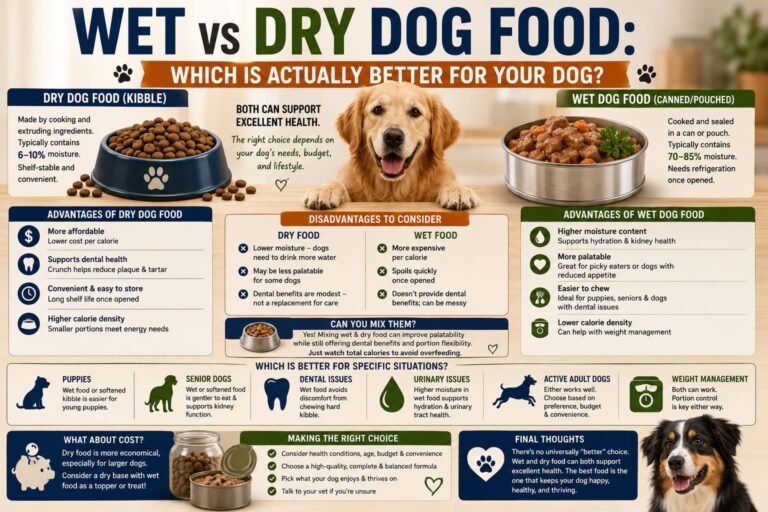
Both can work well, but there are a few senior-specific considerations. Wet food is often easier to chew and more palatable for dogs with dental issues or a diminished appetite, and its higher moisture content can help support kidney function and hydration. Dry kibble remains convenient and can support dental health if your dog doesn’t have significant dental disease, though softening it with warm water is a popular option for senior dogs who need a bit of extra help.
Signs Your Senior Dog’s Diet May Need Adjusting
Noticeable weight gain or weight loss
Decreased interest in food
Increased thirst or urination (can indicate kidney issues or diabetes)
Stiffness or difficulty with stairs and jumping
Changes in coat quality or increased shedding
Digestive upset that wasn’t previously an issue
Any of these changes warrant a conversation with your vet, since they can indicate an underlying health condition that needs to be addressed alongside — or through — dietary adjustments.
Transitioning to Senior Food
As with any diet change, transition gradually over 7–10 days by mixing increasing proportions of the new food with the old. This is particularly important for senior dogs, whose digestive systems may be more sensitive to sudden changes than they were in their younger years.
Final Thoughts
Feeding a senior dog well isn’t about restriction — it’s about recalibration. Their bodies are changing, and their diet should change alongside them, supporting joint health, maintaining muscle mass, and adjusting calories to match a slower pace of life. Regular vet visits, including bloodwork to catch age-related conditions early, combined with a thoughtfully chosen senior diet, can make a real difference in your dog’s comfort and vitality throughout their later years. With the right nutritional support, many senior dogs continue to enjoy active, happy lives well into old age.